Shimano Coasting, design-thinking applied to the cycling industry

I’m just reading Tim Brown’s article on design-thinking in the Harvard Business Review on June 08, and having a complicated mind, I’m thinking of another subject I love : cycling. In a year-or-so, I’ll have to write my Master and I’m desperately trying to find a way to associate these two passions of mine. Actually, I haven’t found the answer to that very question, but IDEO‘s founder’s article gave me a pleasant surprise that will postpone my reading… just until I finish this post ! An example given by the father of design-thinking to back up his reasoning is the “Coasting”-project led by Shimano since 2004, but let’s come back on it in sequence.

Source : Innovation Through Design, by Bill Moggridge (@IDCC)

Shimano is world-famous for manufacturing bicycle components, especially shifting and transmission systems (like its competitor, SRAM). By sponsoring numerous professional teams around the world and being official supplier of the UCI, the japanese company proves his leadership in the sector. High-end segments in both road-racing and mountain-bike segments provides solid growth, what leads Shimano to think about the development of a product for a “high-end casual bike“. IDEO is asked to collaborate on the project.

During the first phase of the design-thinking process praised by Brown (Inspiration, Ideation and Implementation), the stakeholders realize that it would be smarter to target a larger audience than the tech-freaks who would by an expensive commuting bike. The reasons are simple : they discovered that a lot of Americans are “intimidated by cycling“, the reasons being various (roads, technology, culture etc.). Long story short, Shimano decided to tackle this problem by proposing “a whole new category of bicycling [that] might be able to reconnect American consumers to their experiences […] while also dealing with the root causes of their feelings of intimidation“. The concept Coasting was born.

You can find an extensive case study of the project on IDEO’s website, but basically Coasting means that the bike is simple and fun to ride, user friendly and technologies like the automoatic shifting are well-hidden. Branding was built on enjoying life on a bike and promotion was partly based on public relations (local governments, cycling organizations) that promoted safe and easy riding for everyone. At the begining (launch in 2007), only three major manufacturers decided to follow Shimano on the coast path : Giant, Raleigh Bicycles and Trek Bikes.
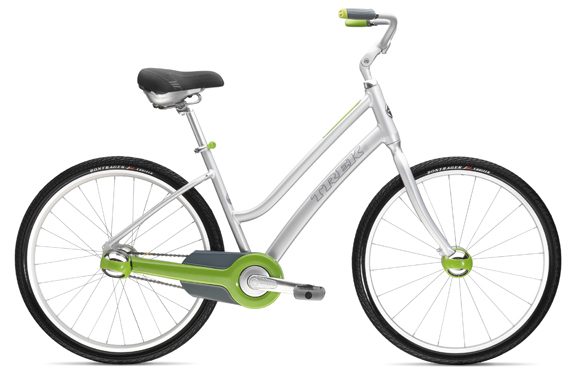
The Lime, Trek's Coasting bike designed by Chad Price (source : bike.shimano.com)

On Shimano North-America’s website, where the above picture is taken from, there are ten manufacturers listed for the 2008 launch of the Coasting Bikes, Trek being one of them. On the current website of the Coasting project, there are still 7 : Giant, K2 (my bike brand!), Phat Bicycles, Raleigh, Schwinn, Trek and Fuji. However, the idea of designing futuristic but simple-looking cruisers for the masses (at a price of USD 700!) worked : Coasting won the Gold Idea Award for Design Exclellence (Industrial Designers Society of America and BusinessWeek) in 2008 and earned a lot of applause since. Brands like Cannondale are thinking about developping similar concepts, as this “concept-bike” by Dutch industrial designer Wytze Van Mansum shows.

Advertisement war within the automotive industry (2006)

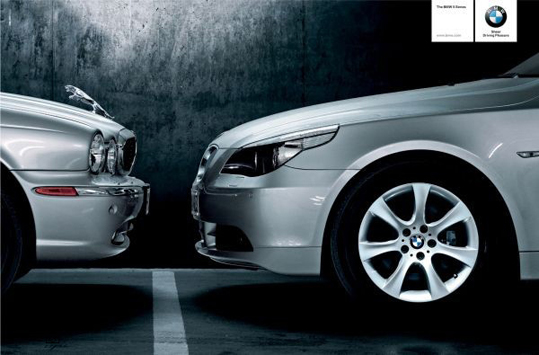
This was the first ad, issued by BMW in a magazine in 2006. Watch the rest…

Car-of-the-year-2006-werbung-jpg

The German counterpart of the “Bayrische MotorWerke”, Audi who is targetted by BMWs ad, replies by praising its successes at the hardest endurance race of the world : Le Mans.

Audi-jpg

Cleverly, Subaru takes advantage of the situation to advertise for its engines. Since, Subaru quitted rally racing sponsorship… and Subaru designers are not flattered by the statement neither.

Subaru-jpg

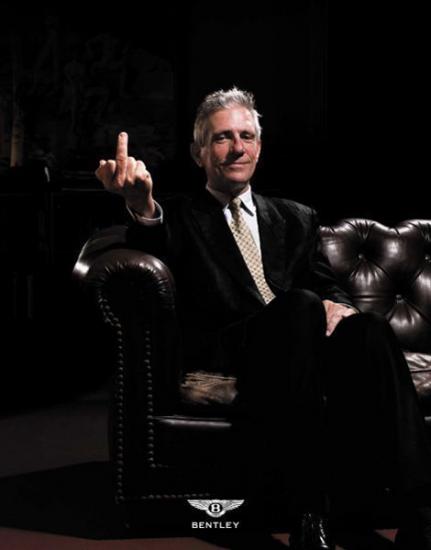
Last but not least : Bentley gives it all the finger ! Bentley never recognized issuing this ad, and some say it’s photoshopped. I doubt that the chairman of the British car manufacturer would support the taste… And if you take the advert out of context (the dangers of the web…), it could seriously harm the company. Anyway, watch this :

Bentley-jpg

The series of ads is very funny. But except the two original “actors” BMW and Audi, what do the others do in the battle ? While Bentley is also part of the Volkswagen group (like Audi), Subaru apparently is a bit isolated in the game. And an a certain way, it’s what the message of “Bentley” is all about. But even if the campaign of Bentley is not official, the battle made it through the world, and the implicated brands undoubtfully took advantage of it.

What about comparative advertising ? Legally, American policy seems to encourage this kind of communication : Comparative advertising, when truthful and non-deceptive, is a source of important information to consumers and assists them in making rational purchase decisions“, especially because they “know of no rule of law which prevents a seller from honestly informing the public of the advantages of its products as opposed to those of competing products“. Ok, but if we count on the advertisers to take purchasing decisions, we would be lost ! Luckilly, we can still count on our minds.


Just for the bonus, here is a last (genuine) one. Enjoy !


Supremacy-jpg

Madza, why Zoom-Zoom?

If I say Zoom-Zoom, you say ? Mazda !

zoom-zoom

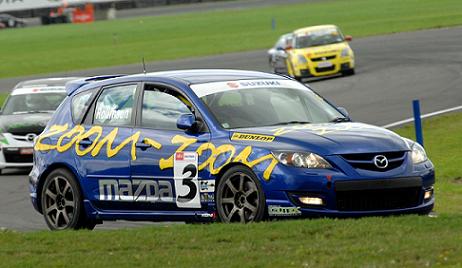
While watching some Eurosport videos, I was “forced” to watch a commercial for the last Mazda, they have to get the money from somewhere anyway… Like on every commercial since 2006, there’s a child whispering “zoom zoom” at the end, and for the first time since then I asked myself : why Zoom-Zoom ??? Is it for the buzz, or is it a wink to something I’m supposed to know about ? None of all that, it’s something that the Japanese love to do : creating a philosophy.

After releasing this press release before the Frankfurt Motor Show 2005, Mazda wanted to prepare people to their concept car Mazda Sassou which stood for simplicity and fun. Instead of this, the attention of the public was turned to the numerous “zoom-zooms” that punctuate the press release. The following video issued by Mazda shows what it is supposed to mean. Nothing in particular actually.

That’s the Zoom-Zoom spirit… If you still haven’t figured it out, then Masahiro Moro may will help you. He now is nowadays in charge of Marketing & Sales at the Mazda HQs but at the time he was the the vice-president of the European marketing business of the brand. Back then, he explained that it is like “the exhilaration we felt as a child shooting down a hill on our bike, this is what Zoom-Zoom means at its most basic level“. And that is what is brilliant about the slogan : it brings over emotions. That what modern marketing is all about.

Mazda zoom zoom

As M. Moro -who looks quite Zoom-Zoom I must admit- explained, it’s “that shiver of movement that Mazda wants to offer with each of the cars we conceive and manufacture“. And to convey that young and passionate image of the Japanese brand, they launched a photo competition with the theme : Zoom-Zoom ! Even though some of the participants must have had some severe difficulties to take such a picture, the competition worked out quite (over 7000 snapshots) well and the winner came from Germany. He won a Mazda Roadster MX-5. See the other winners here.

Sebastian Niehoff

So today we learned what that Zoom-Zoom slogan meant, or at least what it stand for. Small test : do you know whose slogan these are ?

You are, we car ? Feel the difference ? The ultimate Driving Machine ? Beauty is not enough ?

Zoom Zoom ?