After postmodern marketing, what would Altermodern marketing look like ?

The French Enlightenment founded the bases for the idea of progress : rationality, functionality, progress by analytical thinking and trust in the power of science. You could call modern something that never existed before, something new and radically different. Thus, Adam Smith’s The Wealth of Nations (1776) is a modern perspective of international trade, Sigmund Freud’s fundamental structure of the mind (1880’s) or the Bauhaus movement in architecture & design (1920’s to 1930’s) can be seen as modern works of humanity. In a consumption perspective, the lure of an improved standard of living replaced self-sufficiency, abundance and desires ruled. Even though dates are always a slippery matter, we’ll say that the modern era stopped where the postmodern movement began : the oil crisis of 1973.
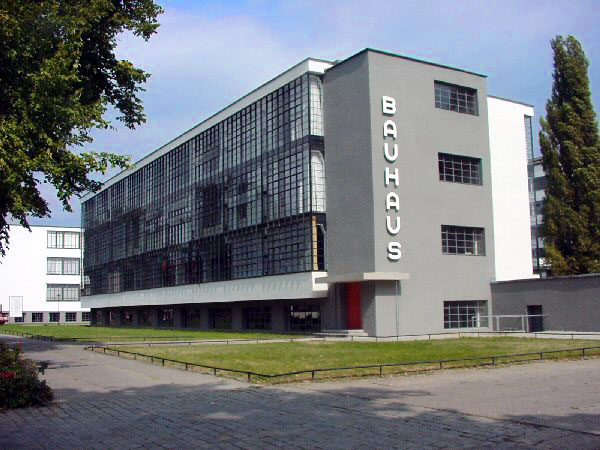
"The Bauhaus style became one of the most influential currents in Modernist architecture and modern design" (text & image retrieved from Wikipedia)

As the last North Amercian edition from Adbusters says, the postmodern erarejected the certainty of an unchanging, foundational truth“, which means that all the models that were developped during the past centuries had to be reconsidered… and capitalism had to find other resources than natural resources to fuel its growth. But various social were also to be considered in the birth of postmodernism : women started working, people had more time for leisure activities, education levels increased. This new culture rejects so-called metanarratives (democracy is the best political model, existency of a good society etc.) and replace this view by “localized narratives” (Lyotard, 1984) which take into consideration of human existence. Postmodern thinkers adopt a middle-ground between metanarratives and the anarchy-like negativity of radically anti-modern thinkers, and this middle-ground contains storytelling, political interest groups, neo-tribalism or the ephemeral. Sounds like marketing ?

In terms of marketing, the postmodern movement is very relevant indeed. Let me quote Bernard Cova, a prominent researcher on these issues : “Postmodernism focuses on both discontinuity and continuity, and is characterized by ambiguity, fragmentation and the juxtaposition of opposites“. By saying that, he basically means that today every consumer is led to play various opposite and paradoxal roles at a time : the medical doctor or the lawyer who belong to non-mainstream motorcycle gangs in the weekends (Dholakia, Firat & Venkatesh, 1994). This means that marketers adopt a tribal approach of their consumers, as Cova says again : “in marketing, postmodernity means supporting the social link – tribes or subcultures of consumption – via experiences which encourage the co-creation of meanings“.
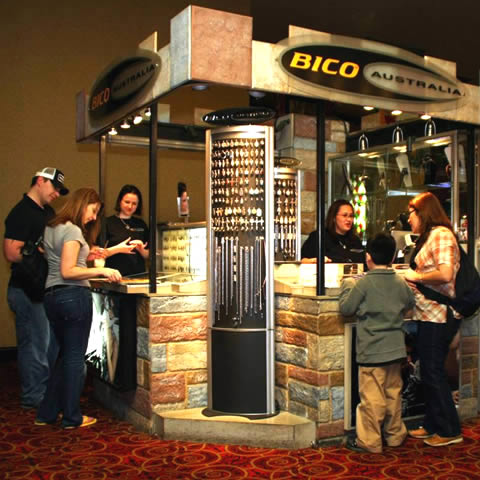
Australian jeweller Bico targets the surfers' tribe... even in Las Vegas (photo retrieved from Bicopacific.com)

Postmodern marketing doesn’t only highlight the role of consumer tribes, their dynamic identities or experience-sharing, it also takes on Baudrillard’s idea of the consumption of images and representations rather than objects. By this, postmodernists don’t mean the status-motivated consumption that already existed in modern times, but they rather describe a hyperreality, as exemplified by theme parks (Disneyworld) or virtual reality (computer games and social networks). Las Vegas is a very good example, offering the possibility to visit hyper-real New York (New-York New-York), Egypt (Luxor), Morocco (Sahara), Venice (The Venetian), Paris (Paris Las Vegas) or Asia (Imperial Palace). Various other expressions make-up the postmodern consumer, you can read these articles for further details :

  • COVA, B., (1996, November). The postmodern explained to managers : implcations for marketing. Business Horizons v39, p15-23. Retrieved March 9 from Business Full Text
  • DHOLAKIA, N, FIRAT, A. & VENKATESH, A., (1994, May). Marketing in a postmodern world. European Journal of Marketing, 29 (1), p40-56.

What is altermodern ???
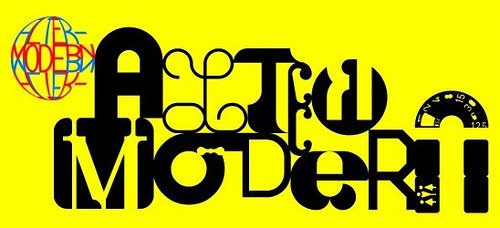
Nicolas Bourriaud's logo for the 4th Triennal exhibition held in London at Tate Britain

Nicolas Bourriaud is art curator and critic at Tate Britain and described the concept in his Altermodern Manifesto in 2009. For him, “a recomposition of the modernity in the present” is emerging, the difference with modernism being today’s global world culture (modernity was dominated by the west, altermodernity is global, creolized). Furthemore, the financial collapse of 2008 marks a turning point in history, which showed that even “technological innovation and financial wizardry” (Adbusters #88) is unable to achieve progress without any negative side-effects (it was seen as the solution to the oil-crisis of 1973 : if natural resources are not sufficient, technical and financial innovation will bring growth). Therefore, Bourriaud says that we have to build up the new altermodern era with the ethos that remains in mankind.

Again, what will this imply in terms of consumption and marketing ? As communities start ruling marketing landscapes (see this previous post, in French) in a more-or-less convincing way, customization and interaction shapes the media, organizations are converging towards the same communication channels hoping to capture customers. But altermodernism is rather about finding ways to satisfy our desires of more, given the particular circumstances of today’s situation.
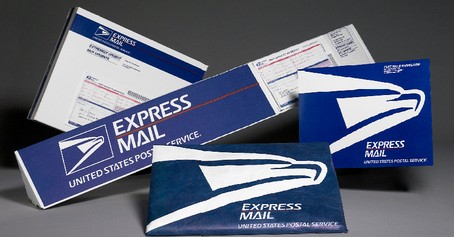
US Postal Services go green : All Express Mail and Priority Mail packages now meet a cradle-to-cradle certification (retrieved from Treehugger.com)

As Richard Heinberg says in his book Peak Everything : Waking Up to the Century of Decline in Earth’s Resources, the coming era will be that of sustainability, simplicity and intelligent design. Not because people will choose to live with less, but because it will become a necessity, nature will restrain the possibilities… as it should always have done. Respect for nature will arise from the need for its resources, as well as craftmanship and quality will gain recognition. Modernity meant that mankind dominated nature to achieve its goals, maybe altermodernity will reverse this point of view.
screenshot

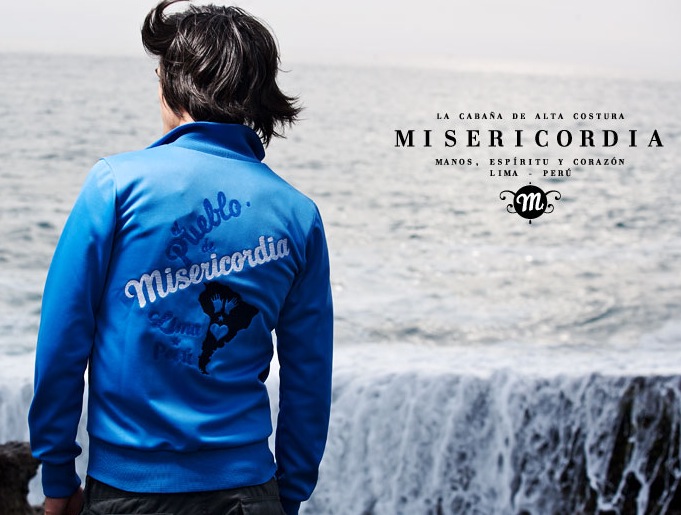
Created by a young French entrepreneur, Misericordia uses the creativity and the craftmanship of Peruvian workers to design beautiful and simple apparel (retrieved from misionmisericordia.com)
Fighter Brands : perverted marketing ?

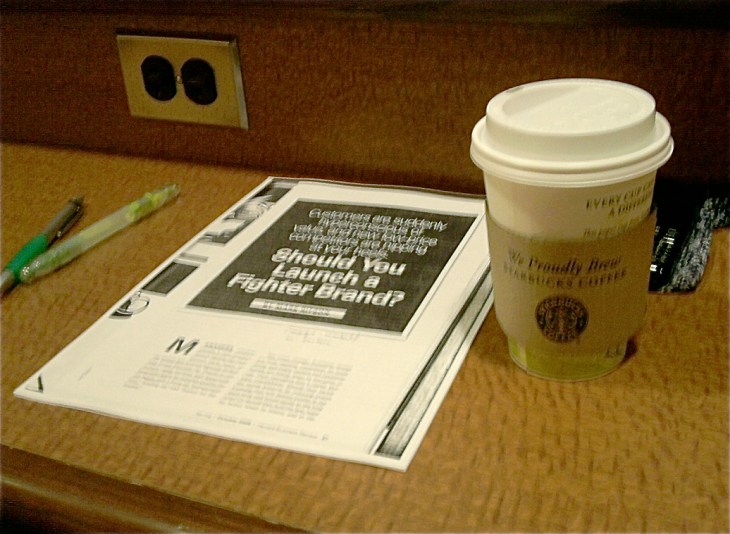
My desk today @ the UWF Starbucks

Currently studying at the University of West Florida, I’m enrolled into the Marketing Strategy course from Dr. Keller one a subject we’ll discuss is the concept of Fighter Brands (or Finghting Brands). In Should You Launch A Fighter Brand?, Mark Ritson from the Melbourne Business School says that “a fighter brand is designed to combat, and ideally eliminate, low-price competitors while protecting an organization’s premium-price offerings” (it is therefore different  than the “marque combat” as defined by the Georges Chétochine). Successfull fighter brands are examples such as Busch Bavarian beer, Intel Celeron processors, Logan by Renault etc.

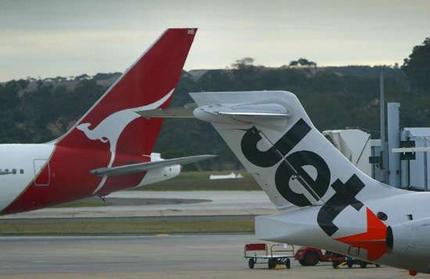
Qantas launched Jetstar, the "perfect fighter brand" according to Mark Ritson (Picture retrieved from the Sydney Morning Herald website : http://www.smh.com.au)

Different evolutions may explain the emergence of fighter brands : the growing market share of private labels, the trends of low-cost products, the infidelity of customers, their ever-changing expectations or simply the current economic crisis… At school we attented a presentation of the French research and survey organization CREDOC in which we were told that the French’s appreciation of low-priced products compared to branded products sank in 2009. Even if sales of private labels now reaches 34% of the supermarkets’ sales in France, brands’ products are still perceived better quality. This shows that consumers still trust brands and value their products, but may don’t necessarily ask for premium products (anymore) : an insoluble equation ?

No, they launch their fighter brands ! This post from another wordpress-blog (lowcostattitude, in French) gives some example of “popular products” launched by Nestlé, Danone &co. As our CEDOC-lecturer told us in his presentation too, we can see that the middle of the product ranges are deserted in favor of premium and low-cost products, using the hourglass-analogy. Brands have to keep customers tempted by low-cost and/or private label products as well as recuperate those who already deserted… but it’s far more complicated than that : Will it cannibalize the other brand’s portofolio’s products ? What should I highlight in the new alternative that I offer ? Will customers be lost ? How much does it cost to launch a fighter brand ?

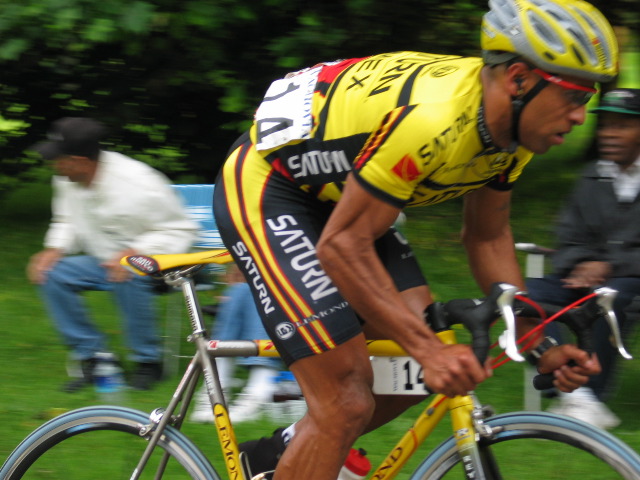
Saturn cars' sales pulled up immediately in 1990... but GM's company -who was a long-time sponsor of cycling : here's Ivan Dominguez riding for Saturn-Timex in 2003- was a financial disaster. (Picture retrieved from dailypeloton.com)

One example is the automotive brand Saturn, launched by General Motors in 1985 to counter the Asian competition making affordable and practical, fuel-efficient cars. As described by Mark Ritson in his article published on October 2009 in the Harvard Business Review, the cars “proved an immediate success and quickly achieved the highest repurchase rates and customer satisfaction scores in the industry“. The cars were cheaper than GM’s products… but were far too expensive to actuallty produce. Very high develoment costs, an expensive production plant, dedicated dealer-network and an independent marketing & branding budget : the business model simply wasn’t profitable !By 2000, despite continuing sales success, Saturn was losing $3,000 for every car it sold“, says professor Ritson in his article. General Motors eventually reformed the whole brand, amongst which was the higher integration of the brand into GM, “and then sales dropped off“. The current crisis, striking GM as hard as the other Big Three, will lead to the definitive shut down of Saturn by October 2010. Renault is doing better with it’s Logan brand…

Why perverted marketing ?

As my Marketing Management book states : “the marketing concept means that an organization should seek to make a profit by serving the needs of customer groups“. Therefore, marketing originates with the unfulfilled need of customers to offer them a product which suits their expectations (eventually the company will promote the product, measure the ROI etc.). Fighter brands emerge from the success of (or the threat posed by) a competitor to which a company creates an alternative offer. In other words : it has a product-oriented vision, dazzled by someone else’s success to push a product in the market. That’s not marketing. And that’s why some companies fail in that strategy ; Kodak launched Funtime, a cheap alternative to its Gold Plus film aimed to counter Fujicolor’s Super G film, but Funtime’s sales cannibalized Gold Plus more than it damaged Super G. Kodak eventually withdrew the product. Jetstar is an example of a successful fighter brand : deep analysis of the market allowed them to create a concept aligned with the customers’ needs.

If you are interested in the subject and seek a deeper insight, read Mark Ritson’s article in HBR. Highly interesting !

Interbrand’s Best Global Brands 2009 : Analysis

interbrand-jpg

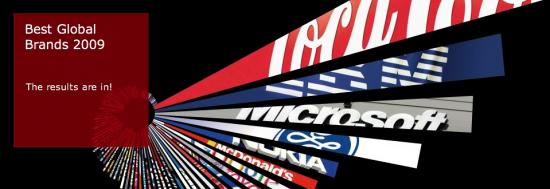
It’s one of the most expected rankings in the media. Today, the consultancy firm Interbrand released its Best Global Brandsranking, which values the “earningsdue to the superior demand created for its products and services through the strength of it’s brand“(p.23). In the introduction, Jez Frampton, Global Chief Executive of the firm, states that “brands provide a degree of security in times of economic instability“(p.3). The report doesn’t take a narrower look to the possible decrease of branded products’ sales (due to their higher price), but the emphasis seems to be put on trust, and on the “exponential shift in social and consumer networking“(p.3). It’s one of the trends approached, in the document…

The experts who contributed to the report insist on several points, like the competitive advantages that a strong brandrepresents for a company. And the current crisis can be beneficial for some of them, who can create “competitive distance” to their competitors. For these weak ones, the crisis is an opportunity to “cast off the ineffeciencies, and cultures that kept them down“(p.4), that’s what the authors call The Cleansing Fire. One example is given by the clothing-industry : when Zara is now famous for supply chain innovation, constantly changing assortment and a clear brand focus, its competitor GAP by failing to evolve with the customer and issuing assortments which consistently missed the mark. Innovation and renewal is also what led Nike to be a global leader today, and Toyota to exceed GM on the world scale.

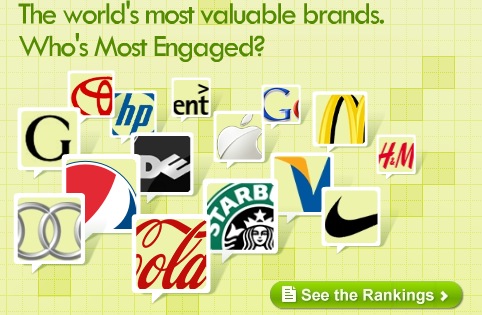
Another very important trend is the evolution of the customers’ expectations toward brands. “Your customer wants in” says the text, stressing the role of the internet in this social evolution. in a “seamless world“, physical barriers are vanishing and consumers want to play an active role in product conception and promotion. By the way, it’s the first time I hear about the 5P’s(Product, Price, Place, Promotion and Package)! We always implemented the packaging aspect into the product definition. Anyway… So social networking is getting more and more important, there’s even a ranking for this : the Engagementdb 2009 report ranks brands by engagement with their communities through social media. This year’s winner is Starbucks. The aim is to acquire a “passionate group of evangelists, who will genuinely spread the good word about what you do“(p.7).

engagementdb-jpg

Other trends are mentionned : sustainability, the return to luxury’s core values, and experiential marketing. In an age in which we are overwhelmed by messages (not only advertising, also mails, text messages etc.), real human interaction has been underemphasized by brands. That’s why Leslie Butterfield, author of one of the report’s articles, called “The Experience Revolution“, advocates to get back to the basics : “Consumers needs this memorable, multisensory experiences to fully engage with a brand“(p.12). This can be applied by designing attractive stores (H&M, IKEA, Apple etc.) or by organising realevents, like the Nike+ Human Race that gathered 80,000 people in 142 countries last year !

Nike is quoted in another article of the report, this time concerning global brand design. The “visual and verbal expression (of Nike) varies more than most brands“, while the universal message is consistent : “If you have a body, you are an athlete“. That’s how Paola Norambuena, head of Verbal Identity, sees successful cultural adaptation. Powerful brand expressions “are universally understood“. The requested experts give some good examples : Apple, Veuve Clicquot, BMW, Nintendo and Disney.

2009 Rank 2008 Rank Brand Country of Origin Sector 2009 Brand Value ($m) Change in Brand Value
1 1 Coca-Cola United States Beverages 68,734 3%
2 2 IBM United States Computer Services 60,211 2%
3 3 Microsoft United States Computer Software 56,647 -4%
4 4 GE United States Diversified 47,777 -10%
5 5 Nokia Finland Consumer Electronics 34,864 -3%
6 8 McDonald's United States Restaurants 32,275 4%
7 10 Google United States Internet Services 31,980 25%
8 6 Toyota Japan Automotive 31,330 -8%
9 7 Intel United States Computer Hardware 30,636 -2%
10 9 Disney United States Media 28,447 -3%


The whole ranking (with report) can be downloaded on Interbrand’s website, as well as those issued in the last decade by the global consultancy firm. For those who like these marketing subjects, it’s sixty-five pages of highly interesting stuff !

Bikes, branded by the automotive industry…

The link between the automotive and bicycle industry is obvious : using man-made technology to get you from A to B as fast as possible, or at least faster than by foot or on a horse ! Since then, numerous automotive brands issued bikes with more or less commitment, and here are some of these bikes :

Ferrari : one of the most prestigious car manufacturers teams up with the Italian Colnago for several years now, which undoubtfully makes sense, as opposed to some of the following bikes. This year’s bike CF7 which is presented on the video on the left once again demonstrates the craftmanship of Colnago (handmade in Italy) and the design and engineering skills of the Ferrari crew in Modena. Only 99 copies will exit Colango’s factories in 2009, at a price of USD 17,500 each (of course!).

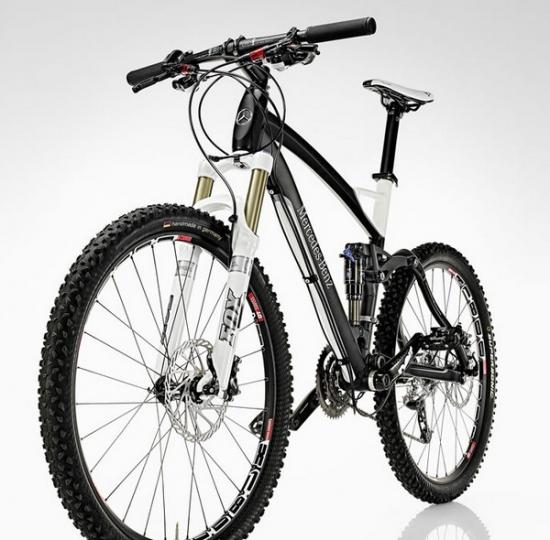
Mercedes-Benz MTB

The noble German car manufacturer Mercedez-Benz is back in bike business ! In collaboration with ADP Engineering (the company based in Dietzenbach that also engineers Rotwild bikes), the merchandising branch MB Accessories GmbH created this high-end full-suspension mountainbike, as well as road bikes and foldable bikes which look as awesome as this Trailblazer model. The bikes are limited editions and sold only in Mercedes-Benz venues around the world, asking some USD 4,000 for the mountainbike that you can see here. If you want to purchase one of the numerous bikes that the German offer, check this out !

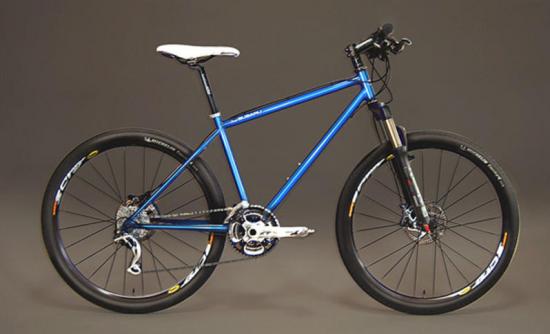
Gary Fisher

Subaru also shows some interest in cycling. The japanese car brand owned by Fuji Heavy Industries Ltd. will outsource the production of its XB steel hardtrail to a japanese company. The 99 available bikes can only be ordered and will cost about UDS 3.900, which I find quite expensive for a chromoly hardtrail. The guys from the Subaru-Gary Fisher MTB Team are cleverer using high-end Gary Fisher bikes for their races in America, as the French riders from the Subaru MTB Pro Team use Mondraker downhill machines !

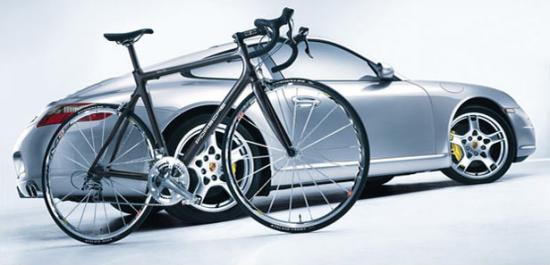
Porsche P/B Storck

Porsche doesn’t only produce cars, but also markets numerous other products like mobile phones, watches, luggage or fashion via the brand Porsche Design. The bikes are nowadays manufactured by Storck, since the former supplier Votec ran out of business. Porsche gives them the specifications and thanks to their famous know-how, Markus Storck and his team produces the over-priced but gorgeous bicycles.

Land Rover Vorbano

Still on the top level of the range, the Brits from Land Rover make surprisingly good mountain bikes as well as urban and city bikes. Once again, production is entrusted an external supplier, in this case 2×2 Worldwide, official licensee for Land Rover on the bike business and known in the UK for distributing Vario mountain bikes from France. The official website shows how serious Land Rover takes the sidestep into the two-wheel industry, offering a range going from a beefy downhill competitor with internal shifting to a carbon XC racer called Vorbano.

Another example is given by Chrysler’s brand Jeep [web]. The bikes are low-priced and sold on the mass market (like the retailer giant Carrefour for France) and the product range doesn’t make much sense. I think they could have exploited their “offroad”-image in a better way to build up a strong brand image on the bicycle market, but the products are still acceptable. Jeep bikes are assembleded by the French company Planet Fun based in Périgny near La Rochelle (France) who acquired the rights for using the name directly at Jeep. As I said, Jeep bikes are sold in Carrefour supermarkets in France and the company specialized in cheap bike assembly, but they also assemble higher-priced bikes like Mongoose (license).

The French Peugeot makes bikes for real, and their track record in the bike industry is quite impressive. Since 1886, when the frenchman Armand Peugeot launched production of a bicycle in the factory of Beaulieu, Peugeot manufactures bikes as well as scooters. When facing difficulties in the 80’s, the bike business was sold to Cycleurope (Gitane, Raleigh, Bianchi etc.) but rapidly they brought back bike assembly to Mandeure, where Cycles Peugeot still assembles its bikes. Today, Peugeot bicycles are sold in the retailer network of the car manufacturer.

lamborghini-toro-mountain-bike-jpg

The first stupid licensing comes from the Italian Tonino Lamborghini. Like the example above, the bike is sold under the control of the merchandising company of the automotive brand. The merchandising branch Tonino Lamborghini was founded by the son of Ferruccio Lamborghini (founder of Automobili Lamborghini in 1963), and sells various products like fashion goods, tools and even an energy drink [see here]! This bike is sold on the mass market, if you live in the UK you just will have to run into the next Tesco store [webstore]. The “Toro” is available in an awful green and costs £240, and certainly isn’t “worthy of the Lamborghini brand” as Tesco says in the product description.

The “GMC Topkick Dual-Suspension” mountainbike is distributed by Kent Bicycles who seems to specialize in selling cheap bikes on the US market under prestigious names like GMC (General Motors Truck Company, currently selling SUV’s in America and the Middle-East), Cadillac or… Tonino Lamborghini.

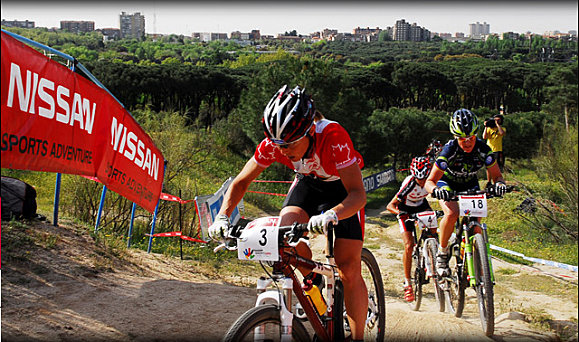
I can’t finish this thread without talking about brands from the automotive industry sponsoring the bike business. When I think about cycling, I can’t avoid the commitment of Skoda in numerous road races (Tour de France since 2004, UCI Road World Championships etc.) and pro cycling teams (Euskadi-EuskaltelCervélo Test Team etc. or see [here]). According to the Czech brand owned by Audi AG (owned by the Volkswagen Group), the global partnership with cycling improves brand image, brand knowledge and of course in allows them to introduce new models. Furthermore, we can quote Nissan who sponsors many famous events[Nissan UCI Mountainbike World Cup worldwide, Nissan MTB in northern Europe etc.].

XC_Madrid

None of the automotive giants makes bikes from A to Z, but who does this anyway nowadays? We can see in these few examples that some of them make gorgeous bikes, allocating eingineering and marketing ressources to issue high-end products. As the cars, the bikes are status symbols which can be sold overpriced to wealthy customers. For the others, it seems to be all about selling a name to the next best company and walking away. As a bike enthousiast, I don’t really understand the strategy of the second group. Raising brand awareness or even brand loyalty can’t be their main intention, does it?

Some examples of charity sport sponsoring

Shirt presentation with the sponsor

Since 1898, FC Barcelona‘s team-jersey is blank from any sponsor. Today, we are witnessing a radical change in the club’s policy regarding sponsoring, although the brand new Chamions League champion has had an original approach : experiencing financial difficulties in 2003, the club started thinking about taking an official sponsor for the first time. The Austrian online bookmakers Bwin, the Beijing Olympics 2008 or Qatar Airways made propositions up to EUR 25.000.000 for five years, but none of them got the jackpot. Barcelona wanted to anticipate the following years, and being “Mes que un club“, they didn’t want to promote a commercial brand after overcoming its financial situation. Why? …

The Catalan club had an informal agreement with the Basque club Atletico Bilbao that stated that, like the national teams, the clubs had to represent their regions (the Basque Country and Catalonia), and therefore not to have any sponsor. When the two clubs finally decided to resort to sponsoring, they swore to choose an “ethically compatible partner”, and whilst Atletico started playing proudly with a large EUSKADI (Basque government funding) on their chest in 2004, Barcelona still hadn’t reached any agreement. The club wanted to go even further, and that’s why it chose to partner up with the UNICEF. Instead of receiving money, the club was commited to pay EUR 1.500.000 in five year to the United Nation’s body for childhood, as well as 0,7% of the revenues of its private foundation… like any European country which has to pay 0,7% of its GDP to the United Nation’s campaign for child education. This is how the FC Barcelona symbolises ethical acting in a world where too few clubs follow in the footsteps of the Barça.

A heart for children

I spontaneously think about the “Ein Herz für Kinder“-logo which we could see on the first half of the season on the shirts of the new German champion VFL Wolfsburg [blog]. In this PR-action, it was the main sponsor Volkswagen who gave up its “shirt-space” to the charity organisation who works for children for 30 years now. Another campaign crossing my mind was the blue “Schools for Africa” stripe on Team T-Mobile’s cycling jerseys, and of course the very popular “Livestrong” campaign of Lance Armstrong who currently races in Italy for his -still- team Astana.

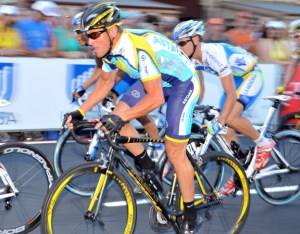
Armstrong ride for Livestrong more than Astana...