I work in marketing, I love sports, culture, creativity and enjoy helping people. I am thankful for much of what life offers, and am getting better at dealing with the unexpected :-) This blog is a way to share some of my passions, reads and thoughts. Don't hesitate to reach out to me, on this blog or social media.
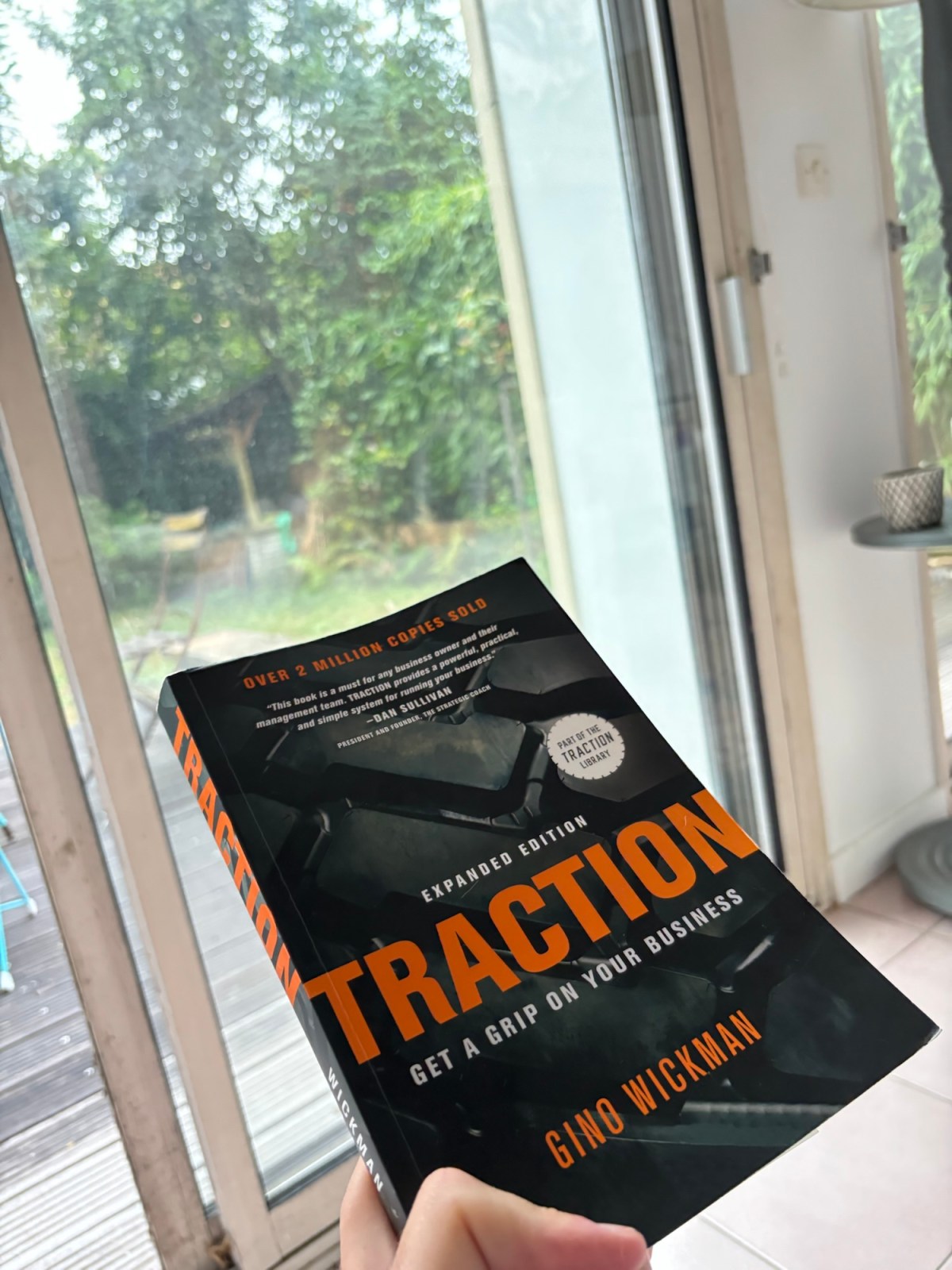
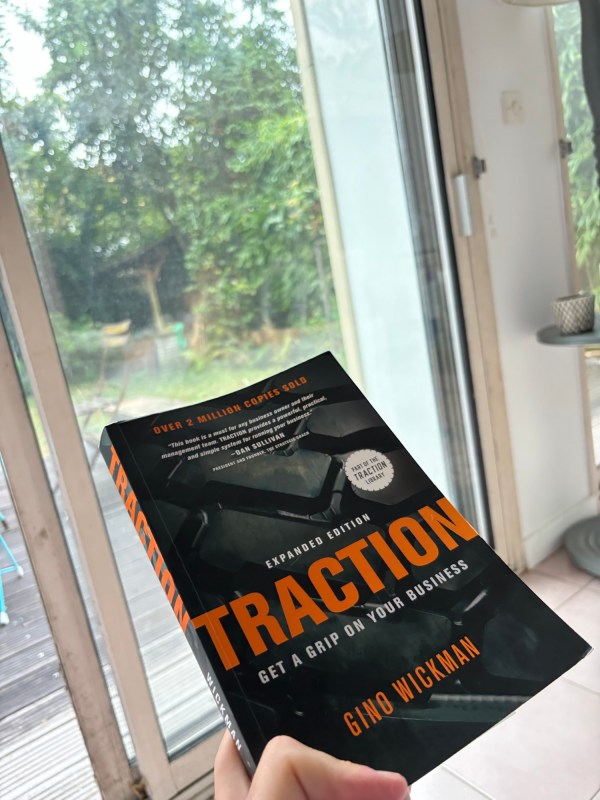
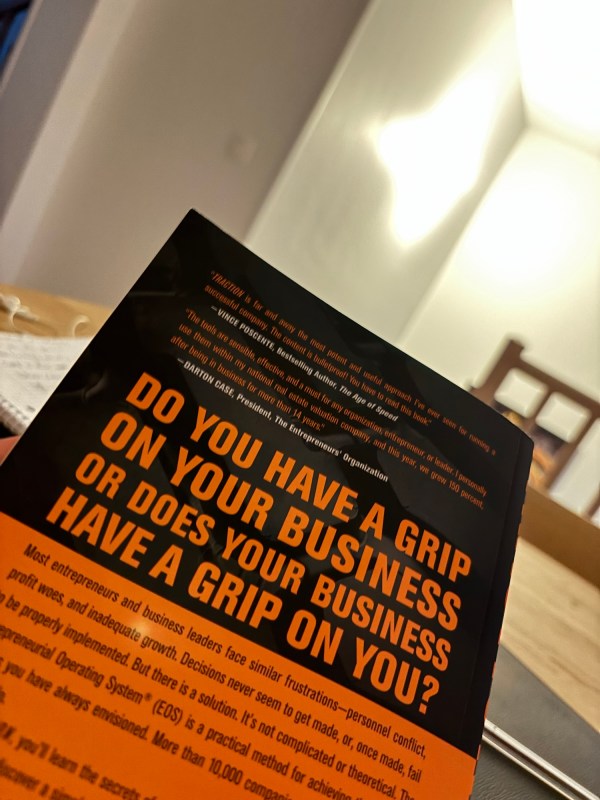
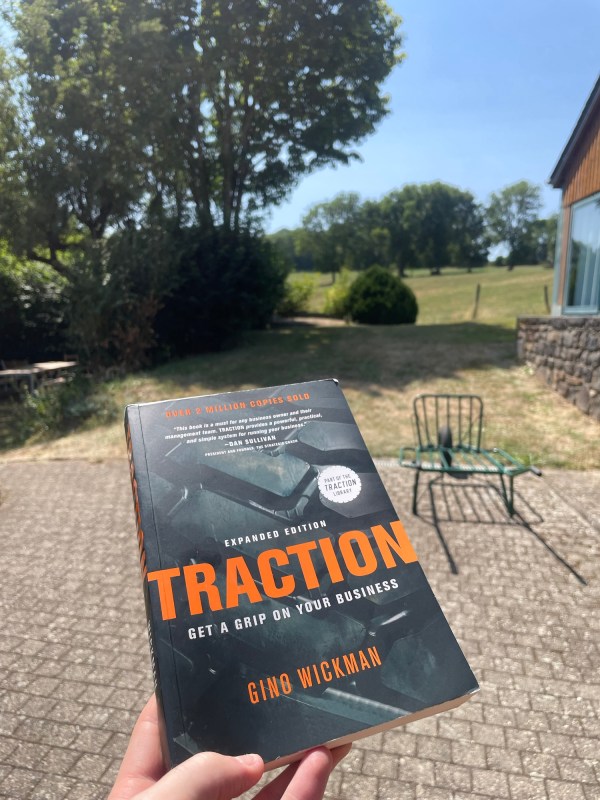
As I’ve been building and expanding my company, Hirondo, I’ve often turned to Emmanuel to share my challenges. Challenges around people: how to attract the right talent, how to inspire others to join the journey, and how to scale the business without losing its soul. In one of our conversations, Emmanuel simply said: “You should read this book. It might help you see things more clearly.”
So, I did. Not in one go, but over the course of the summer, with pauses and moments where I had to put it down and come back later. At the time, my mindset was heavy—I was carrying the weight of leadership, trying to balance big decisions with everyday pressure. But I also wanted to take a step back and look at things with a fresh perspective.
What I quickly noticed is something I often feel when I read American business books: there’s a tendency to oversell, to simplify, to package ideas in an almost too-easy way. And yet, in the middle of all the complexity I was dealing with, that simplicity felt like a relief. It was motivating. It cut through the noise. And that, I think, is the real strength of Traction.
One of the passages that struck me right at the beginning comes from page 3 of the Entrepreneurial Operating System (EOS). Gino shares a client’s perspective:
“I used to worry about 100 different things. Once I learned there were six components to my business, and I focused on only those, those 100 different things I’d been worrying about went away. EOS made running the business simpler.”
One of Gino Wickman’s clients
That line could have been written for me. Right now, I often feel like I’m juggling a hundred worries at the same time—people, growth, motivation, direction, structure, communications… The idea that narrowing the focus to six components could simplify everything is both comforting and motivating.
A little further down, he asks:
“Is all your staff rowing in the same direction? Chances are they’re not. Some are rowing to the right, some are rowing to the left, and some probably aren’t rowing at all. If you meet individually with each of your employees, and ask them what the company vision was, you’re likely to get a range of different answers.”
Gino Wickman
This really stayed with me. Because, honestly, it’s the situation I often wonder about in Hirondo. Do people share my vision? Are we all rowing in the same direction, or are some of us pulling elsewhere—or not rowing at all? I believe many entrepreneurs feel that same uncertainty.
Finally, what I truly appreciated was Wickman’s insistence on simplicity. He writes:
“Most organizations are too complex when they begin. Use models, visuals, acronyms, and checklists to simplify processes and procedures, because as your organization grows, it will get more complex.”
I recognize myself here. I tend to make things complex—whether in my thinking, in the way I communicate, or in how I organize tasks. I also tend to take too much ownership, rather than empowering others. This reminder to simplify, simplify, simplify, is one I intend to carry forward.
Another section that really resonated with me was Wickman’s summary of what he calls the four fundamental beliefs:
You must build and maintain a true leadership team.
Hitting the ceiling is inevitable.
You can only run your business on one operating system.
You must be open-minded, growth-oriented, and vulnerable.
These four elements stuck with me because they capture both what I need to do, and what I need to avoid. Right now, I feel that I’m either already at a ceiling in Hirondo, or that I’ll reach it next year. Recognizing this inevitability, instead of fighting it, is strangely reassuring. It gives me permission to prepare, rather than to panic.
Wickman also shares a story of a client who once said: “I wish I were in that business. It’s so much simpler.” And his answer is blunt:
“Oh, if they only knew. I’ve yet to see a single business that is easy to run. They all take work, all of them. Success in one kind of industry doesn’t necessarily dictate success in another. You can only succeed in the kind of business that is right for you and your team.”
Gino Wickman
This, too, struck me. It’s a reminder that every entrepreneur carries their own invisible struggles. That there is no “easy” business out there. And that what really matters is alignment between the business and the people leading it. Wickman calls it being genetically encoded to do what you do.
To me, that sounds very close to the Japanese concept of Ikigai—the intersection of what you love, what you’re good at, what the world needs, and what you can be paid for. A company, too, needs to find its Ikigai: its unique combination of talents, passions, and leadership that no one else can replicate. That should become its core focus.
And as Wickman insists, core focus is simple. Don’t overthink it.
One of the things I appreciated most in Traction is how Wickman doesn’t just stay at the level of theory. He provides simple tools that can immediately be applied inside a company.
One of these is the People Analyzer. At its core, it’s nothing more than a chart: a list of your company’s values crossed with a list of your people. But the power lies in the clarity it brings. By examining each individual against each core value, you quickly see who truly aligns with your culture, and who doesn’t. It takes what can often be a vague, emotional conversation about “fit” and turns it into something concrete.
Wickman then adds another dimension with the GWC framework—asking whether a person:
Gets it
Wants it
Has the Capacity to do it
This shifts the discussion from “yes/no” judgments to a more nuanced evaluation. It forces you to ask not only whether someone embodies your values, but also whether they’re motivated and capable in their role. It’s a simple but powerful way of ensuring that people are not only in the right seats, but also able to thrive in them.
Another idea that stayed with me was Wickman’s distinction between Visionaries and Integrators. Visionaries are the creative minds, always generating ideas, spotting opportunities, and pushing boundaries. Integrators, on the other hand, bring discipline, structure, and consistency—they make sure the trains run on time. According to Wickman, all strong organizations need both. Without Visionaries, there’s no spark. Without Integrators, there’s no execution.
For me, reflecting on these roles is especially relevant in Hirondo. As a founder, I sometimes feel like I sit in the Visionary seat—thinking about growth, new markets, and future opportunities; and other times in the Integrator seat—managing processes, budgets and team alignment.
But the reminder that a Visionary role must be complemented by an Integrator, someone who thrives on process and discipline, is an important one. And vice versa. It highlights again that entrepreneurship is not a solo act, but a team effort. And it should be, this is how I will have to structure the business to grow.
Another aspect of Traction that resonated with me is the emphasis on running the company with data. I like to think I’m not too bad with data—I keep an eye on cash runway, how much we owe, active projects, and overall financial health. But it’s always valuable to have an external perspective on how an expert recommends structuring this.
Wickman argues that any business should be run this way, regardless of industry. His clients span construction, financial services, and more, yet the principle remains the same: clarity and accountability through metrics.
He recommends creating a scorecard that tracks the goal of each critical item and monitors progress weekly or monthly. Some examples he gives include:
Weekly revenue
Cash balance
Number of sales calls and meetings
Proposals sent and closed deals
Payroll
Customer issues and satisfaction ratings
Receivables and payables
Having this level of detail allows you to spot problems early, celebrate wins, and keep the team aligned on measurable outcomes.
Beyond the scorecard, Wickman emphasizes the importance of an accountability chart. Every metric, project, or objective should have a clear owner: someone responsible for ensuring that deadlines are met, margin goals are achieved, quality standards are upheld, and customers are satisfied. This clarity not only reduces confusion but also empowers teams to act decisively.
For me, this reinforced the idea that even in a fast-moving startup like Hirondo, structure and data-driven accountability are not just nice-to-haves—they’re essential. It’s about giving freedom and responsibility at the same time.
Another practical takeaway from Traction is the concept of the quarterly meeting pulse. Wickman recommends bringing the leadership team together every quarter to review the previous quarter, revisit the company vision, and establish what he calls Rocks, or key priorities and issues to tackle. Each ROC should have a clear owner, ideally one person, and include next steps to move things forward.
I also found it valuable to consider an annual meeting pulse and, even more importantly, a weekly meeting pulse. At Hirondo, our weekly meetings can sometimes feel frustrating—either too frequent with rapid-fire updates, or too sparse and disconnected from ongoing priorities.
Having a structured weekly agenda, aligned with quarterly ROCs and the overall vision, seems like a simple but powerful way to track progress and accountability.
Of course, the effectiveness of these rhythms depends on having already defined priorities, vision, and ownership—so it’s not a plug-and-play solution. I plan to adapt it to our way of working, but it’s a great framework for seeing who owns what and how things are moving forward.
Finally, I appreciated the organizational checkup in the book: a set of 20 questions covering accountability, team alignment, priorities, target market, processes, and meetings. Reflecting on these questions gave me a clear picture of where we stand. For a two-year-old company like Hirondo, I’d say we scored about 60%—not bad, but also a clear reminder of how many areas we still need to improve.
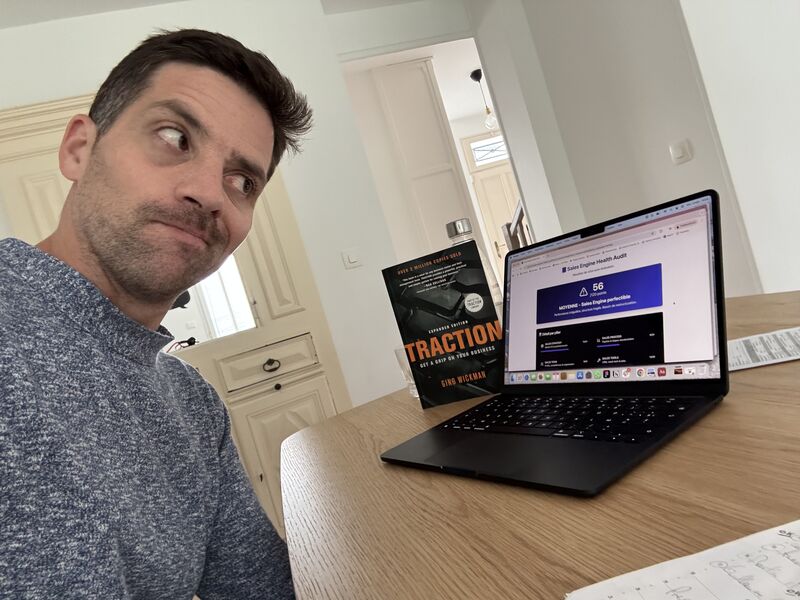
Everything at Hirondo is so improvable. I scored 60/100 on the EOS Organizational Check-up (team strategy & ops) and 56/120 on the Sales Engine Health Audit (sales organization). Some might find that discouraging—I find it motivating.Building a company is a daily effort, and it’s just as important to celebrate progress as it is to know what still needs to be done. Try it yourself and share your score: French – open access | English – login required
I want to close by sincerely thanking Emmanuel for sharing this book with me.
Reading Traction helped me realize that many of my doubts as an entrepreneur are normal. It’s normal to wrestle with finding the right balance between control and leadership, between vision and the daily operational grind. It’s actually okay to be a bit of a pain in the ass about details, to be rigorous, self-aware, and detail-oriented—because that’s exactly what Gino Wickman says you need to do.
The book also reminds me to stay focused, something I sometimes struggle with, and it provides a wealth of relatable examples of companies that are not much bigger than mine today. Success doesn’t require being huge—you can be niche, small, and still thrive.

 Yannig Roth / This is my personal blog