“The video contest landscape is like the Wild West” says an experienced participant

colt

Image via Gerard Elmore (vimeo)

I recently read a very interesting blog post from Jared Cicon (a.k.a. Video Contest King) about participation in crowdsourcing. Jared is a pioneer participant in video contests; he was one of the finalists of the first Doritos contest in 2006, and has taken (and won) a lot of contests since then. In his blog post “You…against the rest of the freelance world“, Jared shares his point of view about the current video contest lanscape. In his blog post, he says how much more competitive it is now: “what I’m hoping to demonstrate […] is how difficult it can be to freelance in our video world, and that we are clearly facing ongoing increased competition with every passing week“. As a consequence, he says, brands’ expectations are getting higher and it is therefore more difficult to win contests and earn money.

While it is always tempting to do those things that feel more ‘artisitic’ and which are more personally fulfilling, they must be balanced with content that the brands can use and that ‘get the money to pay the bills’

The crux of his blog post is “Evolve or die” – much like in the Wild West. I invite you to read the great post that he wrote on his blog if you want to find out more. After reading his insightful post on his blog, I thought it would be great to talk about crowdsourcing “from the other side”. He nicely took the time to answer a couple of questions about himself, his activity as a producer and about crowdsourced video production in general, and it’s my pleasure to publish the interview here on the blog. Continue reading →
Consumer creativity across cultures: the case of basketball fans

sneakers

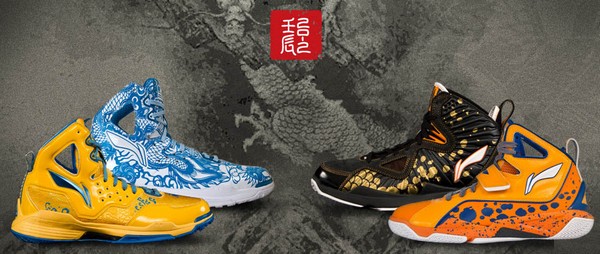
Li Ning’s “Year of the Dragon” collection is specifically targetted towards the Chinese consumer (image via solecollector.com)

Currently my PhD work is taking an interesting direction: how does crowdsourcing work across borders? I just blogged about a crowdsourcing experiment in China, and about evidence from Mechanical Turk, and in this post I’d like to share the findings of a paper that looked at creative expression across cultures: A Comparison of Creative Behaviours in Online Communities across Cultures (Jawecki, Füller & Gebauer, 2011). To my knowledge is one of the few papers today to compare creative consumer behaviour across cultures. “We find that culture does have an influence on creative processes and expressions“, the authors say. Here’s why. Continue reading →

Crowdsourcing in China : Learnings from the “Red Mat” design experiment

cover

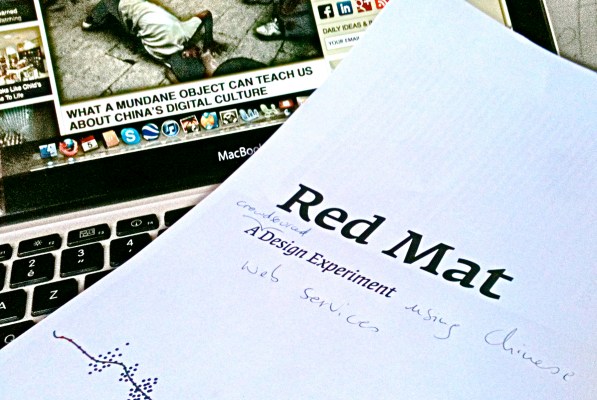
On this blog, I’ve already blogged about crowdsourcing across cultures and crowdsourcing on Chinese platforms. To be honest, it’s a topic that I would like to explore further on my PhD work, because there seems to be few research about this. This post relates some findings of a design expermiment called Red Mat, which is a personal project of Jan Chipchase, who is also Executive Creative Director of Global Insights at Frog Design. I found out about the Red Mat project on PSFK, but at first I didn’t really understand what it was about… Now I see that it’s an exploratory project that heavily involved the use of Chinese crowdsourcing services. Here are some of the learnings… Continue reading →

Crowdsourced video contest reveals how people feel about luxury today

luxury

Image via Zooppa.com/contests/what-is-luxury

French reserachers Lobre & Lebraty say that the value of crowdsourcing lies in the innovativeness of ideas and in the authenticity of contributions. Similarly to what is explained in this whitepaper, this post is about a specific case where crowdsourcing is being used by a company to get authentic market feedback from consumers: The What is Luxury contest on Zooppa. This competition has been sponsored by Euro RSCG and explicitely asks videomakers to interview consumers about their perception of luxury. Since all the videos were available to everyone, I thought I would do a brief content analysis… and found some interesting insights! Continue reading →

B’Twin and Local Motors launch a series of contests to co-create an electric tricycle

the forge btwin competition

Yesterday I received an email from B’Twin’s press department, it was entitled “the 1st bike created by a global community” (in French). That made me curious, and after reading the email and the attached press release, it was clearer what they meant by this statement : the bicycle brand has launched a co-creation contest on Local Motors’ community website The Forge to ask people to design a new personal transport vehicle, the “B’Twin Vélomobile”. A couple of months ago, Quirky has held a short project about reinventing the bicycle, but it was more an entertainment/PR/community animation project than an actual co-creation project. Want to know a little bit more about B’Twin’s contest? Continue reading →

11 of the 12 Best Global Brands use creative crowdsourcing

100

Click on the image to get to Interbrand’s poster of the 100 Best Global Brands

UPDATE (Sep 19th 2012): To find a visual and interactive illustration of all the cases listed below, see my timeline of crowdsourcing initiatives by brands

This is going to be a loooooong post – eventually. I will try to list all the creative crowdsourcing initiatives that I know of, applied to Interbrand’s ranking of the 100 Best Global Brands. I eagerly invite you to contribute with your knowledge because I might miss some – what do I say – I will miss some of them. Why list all these crowdsourcing initiatives? I would like this post to be another way to show how big creative crowdsourcing is getting in marketing and innovation. I hope you like it. And again, please share the creative crowdsourcing initiatives (contests, engagement platforms, challenges etc.) that I missed – and let us stick to the brands (not the parent companies). Thanks! Continue reading →

Crowdsourcing across cultures: Recent evidence from Mechanical Turk

mechanical-turk-amazon-illustration

Image via vator.tv

Do you know Mechanical Turk? It’s a web-platform that is hosted by Amazon.com and allows you to perform small (and usually repetitive) tasks and to earn a little money. Everybody can set up a task, and everybody can perform a task, that’s why Mechanical Turk  is called a “marketplace for work” (there are numerous other platforms like this). For the person who sets up a task, it’s like having a human-powered machine that performs tasks for you. And for researchers, it’s a fantastic playing field to explore crowdsourcing because of the sheer amount and diversity of people who perform tasks on the platform for little money! This post highlight three pieces of research that explore why people from India and the United States are active on Mechanical Turk.

Continue reading →