The concept of the crowd: From troublemaker to problem-solver

Obama speaking in front of a crowd

Imagie via mrsmart.wordpress.com

What exactly is a crowd? Wikipedia says it’s “a large and definable group of people,” underlining that it’s a different concept than the mob (the so-called lower orders of people in general) or the masses (everybody in the context of general public). This post is not about the concept of the crowd in general, but about an academic paper that examined how the sociological concept of the crowd evolved over time. In Reconfiguring the sociology of the crowd: Exploring crowdsourcing, Mark N. Wexler from Simon Fraser University (Vancouver, Canada) discusses the way in which the crowdsourcing trend reconfigures the classical sociological treatment of the crowd.
Continue reading →


Does Common Culture Affect Work Attribution in Crowdsourcing?

screenshot

Click to see the working paper

Crowdsourcing fundamentally transforms the way we work, particularly in creative industries or – on the other hand – in the execution of low-qualification tasks with platforms such as MTurk or oDesk. I’ve recently read a working paper about the latter, the marketplace for work oDesk (which has an army of researchers, mostly to analyze log data, see these cool visualizations). This paper particularly seeks to understand how culture impacts the attribution of work to people via oDesk. Or in other words: Do Indians from abroad attribute work more to Indians from the home country than to others, with similar qualification? Continue reading →

Defining creative crowdsourcing (crowdsourcing of creative activities)

creatividad

“Creatividad”, an ad for an insurance company from Peru (via adsoftheworld.com)

In the first year of writing a PhD thesis, you’re basically asked to define key terms and to set up a research question. I’m particularly interested in crowdsourcing, and more particularly crowdsourcing of creative tasks. This post proposes to define the term creative crowdsourcing, or crowdsourcing of creative activities, as it hasn’t been defined yet (to my knowledge). I would love to have your thoughts about the proposed definition, it can only help me refining it in order to improve my doctoral dissertation! Continue reading →

Crowdsourcing and Marketing: Should companies try to target specific audiences?

crowds

Crowdsourcing and marketing, a tough equation to solve. Why? Because crowdsourcing is about openness whereas marketing is about targeting; crowdsourcing offers serendipity when marketing is looking for predictability. Brands often want to target a specific target audience: “Can you only ask Chinese people to participate?” or “Is it possible to accept only the users of my product?” or even “I want only ideas from women from 25 to 35 years, is that possible?” are questions that often get asked while discussing the possibility to launch a crowdsourcing project. The truth is that the internet is a global medium and that everyone can potentially participate in a crowdsourcing challenge. Targeting is difficult, and only few succeeded. Continue reading →

Consumer creativity across cultures: the case of basketball fans

sneakers

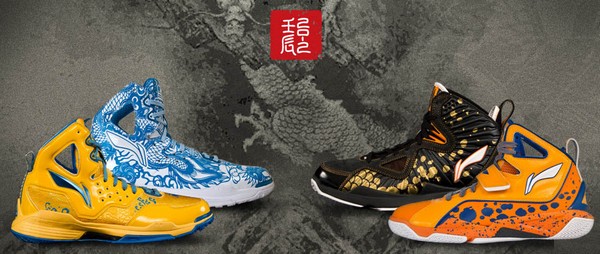
Li Ning’s “Year of the Dragon” collection is specifically targetted towards the Chinese consumer (image via solecollector.com)

Currently my PhD work is taking an interesting direction: how does crowdsourcing work across borders? I just blogged about a crowdsourcing experiment in China, and about evidence from Mechanical Turk, and in this post I’d like to share the findings of a paper that looked at creative expression across cultures: A Comparison of Creative Behaviours in Online Communities across Cultures (Jawecki, Füller & Gebauer, 2011). To my knowledge is one of the few papers today to compare creative consumer behaviour across cultures. “We find that culture does have an influence on creative processes and expressions“, the authors say. Here’s why. Continue reading →

Crowdsourcing across cultures: Recent evidence from Mechanical Turk

mechanical-turk-amazon-illustration

Image via vator.tv

Do you know Mechanical Turk? It’s a web-platform that is hosted by Amazon.com and allows you to perform small (and usually repetitive) tasks and to earn a little money. Everybody can set up a task, and everybody can perform a task, that’s why Mechanical Turk  is called a “marketplace for work” (there are numerous other platforms like this). For the person who sets up a task, it’s like having a human-powered machine that performs tasks for you. And for researchers, it’s a fantastic playing field to explore crowdsourcing because of the sheer amount and diversity of people who perform tasks on the platform for little money! This post highlight three pieces of research that explore why people from India and the United States are active on Mechanical Turk.

Continue reading →

Understanding participation on a massive crowdsourcing platform

Hompage of crowdsourcing platform TaskCN

As time goes, we can see that crowdsourcing platforms gain momentum and attract both companies (seekers) and consumers (solvers). Some platforms are used to innovate in science (InnoCentive, Hypios, NineSigma), others to connect creatives and companies (Jovoto, eYeka, Poptent), and others are huge marketplaces of work or creative task (Mechanical Turk, Witmart, TaskCN). This blog post is about a piece of research that tries to understand participation on the latter platform: the Chinese marketplace TaskCN. What type of contests work best? Does more money attract solvers? And what role does peoples’ experience play in winning contests? Their finding can have strategic implications for designing online contest. Continue reading →