Co-Creation in the Banking Industry: Crédit Agricole’s Alpha Project

tugdual-de-latour-alpha-agence-credit-agricole

On December 13th 2010, the Parisian branch of Crédit Agricole, one of France’s leading banks (whose co-creation efforts I already covered here in French) announced the launch of the Alpha Project. By creating a physical space in the center on Paris, the co-creation project is meant to invite consumers in a physical store, to let them suggest and test new ideas and to eventually co-create the bank-client relationship. This is an interview of Tugdual de Latour, the manager who handles the Alpha project since the early days.

I met Tugdual in the Alpha Agency, and asked him what results the experiment has provided so far. His 2-and-a-half years experience as a co-creation manager prove to be invaluable for all those who are curious about customer involvement. Here are his answers about running a co-creation experiment in the banking industry, about the good and bad sides of customer involvement, and the future of the Alpha Project. Continue reading →
@DBrabham’s “Crowdsourcing” Book

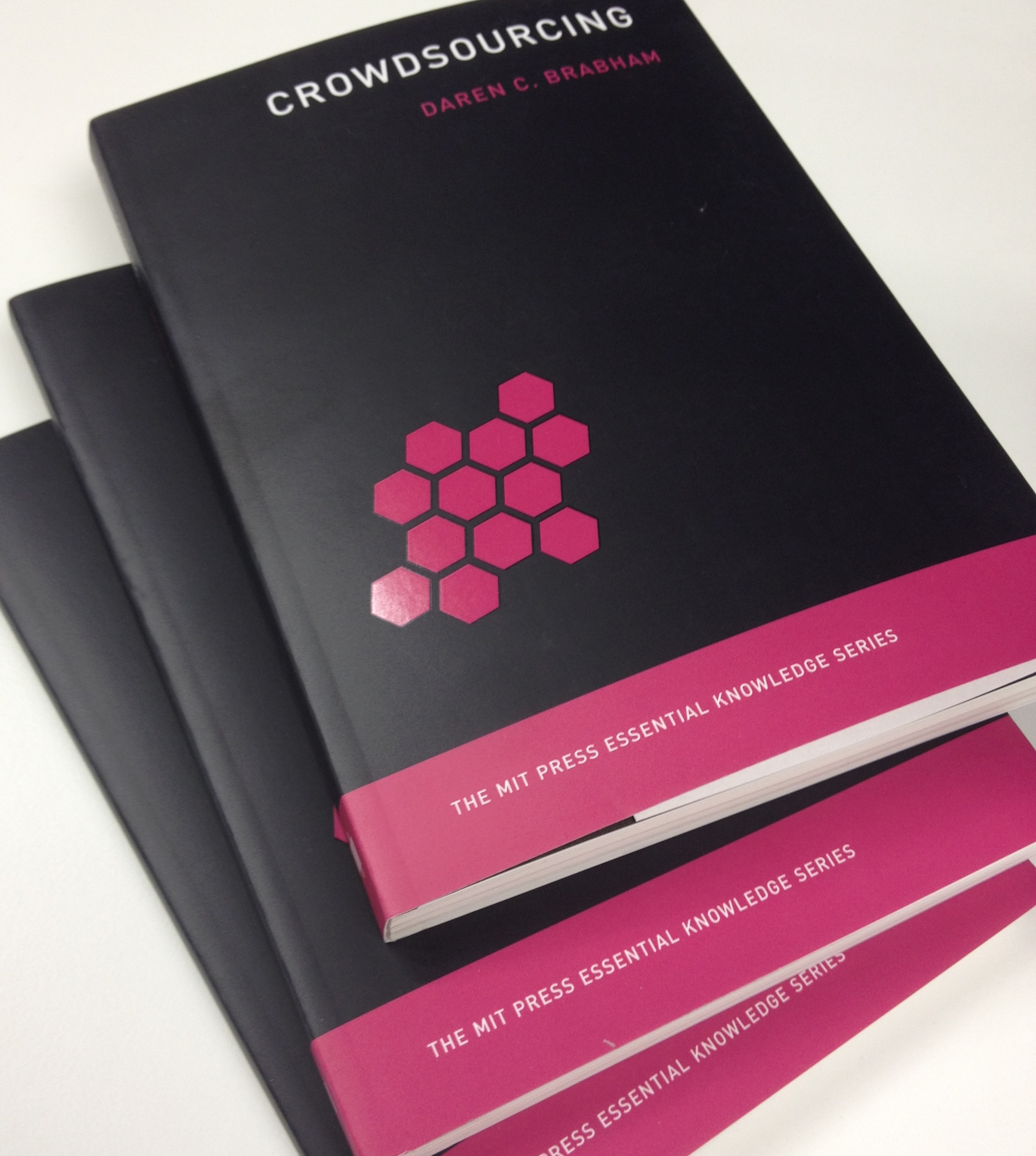
daren-brabham-crowdsourcing-books-photoSince Jeff Howe’s article (2006) and book (2008) on crowdsourcing, journalists and researchers have widely been using the term. In every article I read, from blog posts to academic writings, Howe is always given as a reference. The fact that most people relied on a magazine article and a business book gave birth to a variety of conflicting definitions of crowdsourcing (with or without Wikipedia, Linux, or YouTube) which made it really hard to understand for the layperson who didn’t have time to make her/his own opinion.

But one researcher, who wrote his doctoral dissertation about crowdsourcing, provided a clear definition from the start (which was as early as 2008): Daren Brabham. assistant professor in the School of Journalism & Mass Communication at the University of North Carolina at Chapel Hill.  He just wrote a book, simply called Crowdsourcing, published in MIT Press’ Essential Knowledge Series, about what crowdsourcing is, and what it isn’t. I hope it will be used next to Howe’s article (2006) and book (2008) in forthcoming writings about crowdsourcing, because it clearly dots the i’s.

Continue reading →

Genius Crowds, Another Company That Failed to Turn Co-Creation Into a Profit

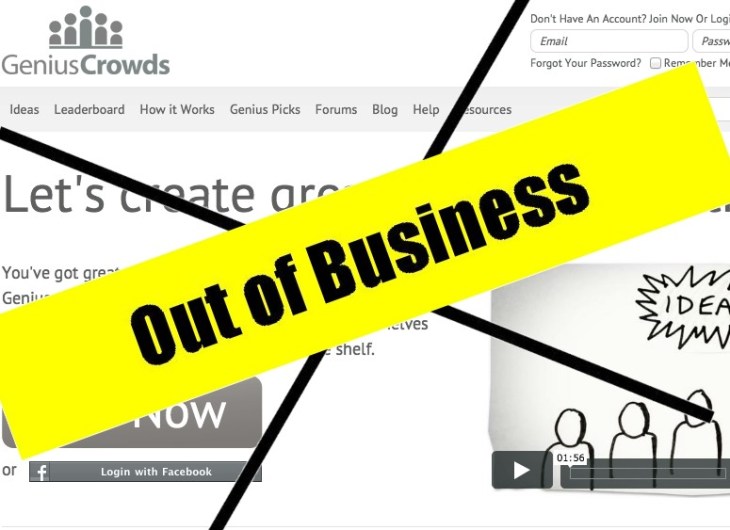
Genius Crowds is Out of Business

In May 2011, I covered the French platform Crowdspirit, and tried to discuss the reasons of its failure. In August of the same year, I wrote a blog post about the costs of co-creation, underlining that there are substantial costs to orchestrate crowdsourcing and/or organize co-creation, and that profitable platforms are actually rare. Well, very recently, crowdsourcing.org announced that a US-based crowdsourcing company, Genius Crowds, had to close its doors. Why? Because Genius Crowds was not able to turn their co-creative model into a profit.

“As a small startup, we frankly didn’t have enough resources to do the job of business development that we wanted to be able to do” (C.J. Kettler, CEO and co-founder) Continue reading →

How Crowdsourcing is Used in Video Advertising

My presentation at the IMMAA Conference in Lisbon (you can turn up the volume, it’s a little low)

Broadband internet coverage, mobile internet access, ubiquitous mobile devices… a variety of factors allow us to consume video more than ever before in the young internet history. Brands have discovered that video advertising is seen as a particularly effective way to promote their products and services. WARC recently reported that brands’ spending on online video advertising is expected to increase 41% in 2013 to $4.1 bn, according to figures from eMarketer.

But how can they produce quality video content at an affordable cost? One way to do that is to crowdsource video content production. In other words, launch online video contests. How is crowdsourcing used in the production of video advertising today? In an attempt to understand this subject better, Rosemary Kimani and I have written a book chapter about it. We have identified 4 crowdsourcing models in the current video advertising landscape. Continue reading →

Can This Start-Up Become the French Quirky?

Click to access novin.fr

I just discovered a new French start-up in the co-creation/crowdsourcing/open innovation field, it’s called Nov’In. The website describes itself as “the first social network for innovation,” allowing anyone to submit ideas that could turn into reality – if the crowd likes them – and have them sold in stores. Sounds familiar? The founder of the start-up, Ismael Meite, explains that his idea came from seeing the success of Quirky,which has a turnover of  about €30 million” (I don’t know where he got that information from, because Quirky is privately funded, but anyway). Here’s how it’s supposed to work… and my opinion about it. Continue reading →

Two Growing Crowdsourcing Start-Ups from France: Creads and Studyka

logos

The French start-up ecosystem is highly active and dynamic, comprising several crowdsourcing businesses (Creads, eYeka, Graphiste, Studyka, Wilogo are some of them). Some crowdsourcing platforms have vanished (Crowdspirit), some have just appeared (99designs.fr), and some have been silently growing since their foundation in the late 2000’s. I met the co-founders of two high-performers of the French crowdsourcing industry: Creads, which calls itself the participatory agency, and Studyka, which organizes challenges targeting students and young professionals. Here’s what they told me (it’s a long post ;-)) Continue reading →

The role of randomness in crowdsourcing

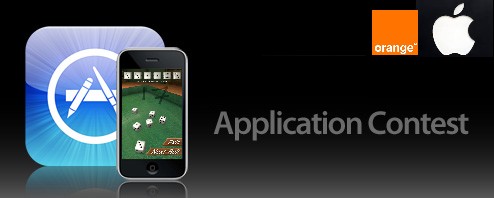
app-contest-dice illustration

I’ve just read a very interesting paper about crowdsourcing, authored by four researchers from Vienna (Austria). It’s called “Does god play dice?” Randomness vs. deterministic explanations of idea originality in crowdsourcing (PDF), will be presented in June at the 35th DRUID Celebration Conference in Barcelona (Spain), and argues that the originality of ideas in crowdsourcing contests is largely random (not determined by skills, expertise, creativity or motivations of participants or other deterministic factors). To come up with these results, they simulated an app contest sponsored by Apple and Orange.

Continue reading →