My Favorite Readings in May: Nobel Prizes Across Time and Space, Spurious Correlations & Shut Up Legs!

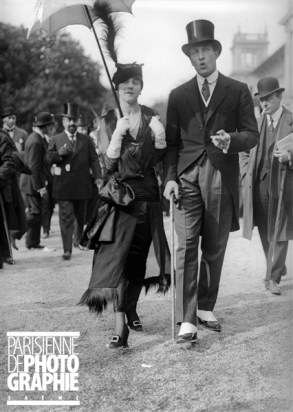
Mode à Longchamp. Paris, 17 mai 1914.  © Albert Harlingue / Roger-Viollet

Parisian couple, exactly 100 years ago (© Albert Harlingue / Roger-Viollet)

This is a photo of a Parisian couple, walking around the Longchamps hippodrome on May 17th 1914 (photo by Paris en Images). It has no link whatsoever with the content of this post – my favorite readings of May 2014 – beside the fact that it was taken exactly 100 years before I tweeted about the ESCP Europe Spring Research Camp. But I just thought it was a cool illustration, showing Parisians in style. Parisians still have style.

Anyway, below you will find my preferred articles and videos of this month. There’s a TED talk about sports, a couple of videos (viral or not), some images, a couple of articles and a visualization. I hope you like it. Continue reading →

A New Cultural Construct: “Tightness” & “Looseness” of Societies

tight cultures loose cultures

People who are interested in cross-cultural behavior and cultural differences between countries (like me) will likely know Hofstede’s work, or the works of Edward T. Hall and Fons Trompenaars. I learned about them in business school, and absolutely loved to think about their frameworks, which are almost mainstream today. In the last years I also discovered the Shalom H. Schwartz, who created, ran, and still runs a very complete survey about the values that individuals from different countries have (achievement, hedonism, power, self-direction…). But recently, I discovered a relatively new cultural theory: the theory of cultural tightness and looseness. Continue reading →

Twiinkly Wants To Crowdsource The Photo Coverage of (Sport) Events

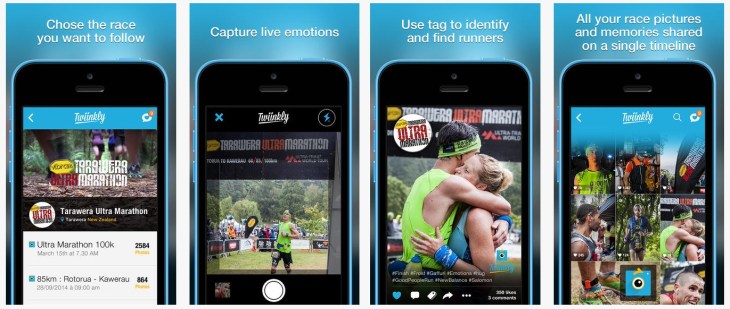
Click on the image to see Twiinkly on the App Store

Click on the image to see Twiinkly on the App Store

I love running, and I somehow I am interested in crowdsourcing too (you didn’t notice?), so I’d like to feature an exciting start-up here. Twiinkly, founded by Christophe Delalande (SKEMA 2009) and Martin Gaffuri (ESSCA 2009), wants to leverage events’ audiences to enable better coverage by the spectators: “As an onsite spectator, become actor of the live coverage by taking photos and sharing them on Twiinkly,the App Store description says, “enter a runner’s name or their bib number to customise the race timeline and have a unique and personalised live coverage experience.” Here’s more about Twiinkly. Continue reading →