I remember writing a blog post about another IDEO concept: Shimano Coasting. Their concept was supposed to make cycling attractive for the masses, but it eventually got dropped, what led my to question about the possible reasons for this failure. This post, is about a well-documented IDEO case: a shopping cart developped in 1998, that obviously didn’t make it to the stores… or did it? Actually it did, it just has been picked up more than a decade later, and it’s being rolled out here in France. Not by IDEO. Continue reading →
Author / YannigRoth
Crowdtap’s Brand Influence metric: my questions

Few people will commit to a brand like this little boy... but how to measure brand influence?
I am a passionate reader of FastCompany.com and its design pendant FastCoDesign.com (and I advise you to have a look at it, very inspiring!). Right after publishing a blog post the difficulty of classifying crowdsourcing actors, in which I placed CrowdTap as an example of good measurement/metrics, Fast Company published an article about their last innovation: the Brand Influence Metric. Brand Influence (“the cross-channel metric for marketing impact“) measures the power of any marketing action to impact consumers’ advocacy of the client’s brand and willingness to purchase its products. Does this metric usher a new era for marketing metrics or is it a proprietary metric with limited broad impact? Some questions…
Why classifying the actors of crowdsourcing is so difficult
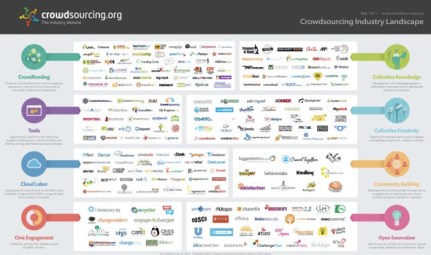
Click on the image to download a large version
A couple of months ago, the website crowdsourcing.org released a neat infographic called the 2011 Crowdsourcing Industry Landscape. It gathers various websites and companies which leverage crowdsourcing as a business model. This post is not about discussing whether crowdsourcing is an industry or a work process, I just want to clarify this taxonomy, based on other sources and my humble experience. Continue reading →
Does crowdsourcing for communities (rather than for companies) make sense?
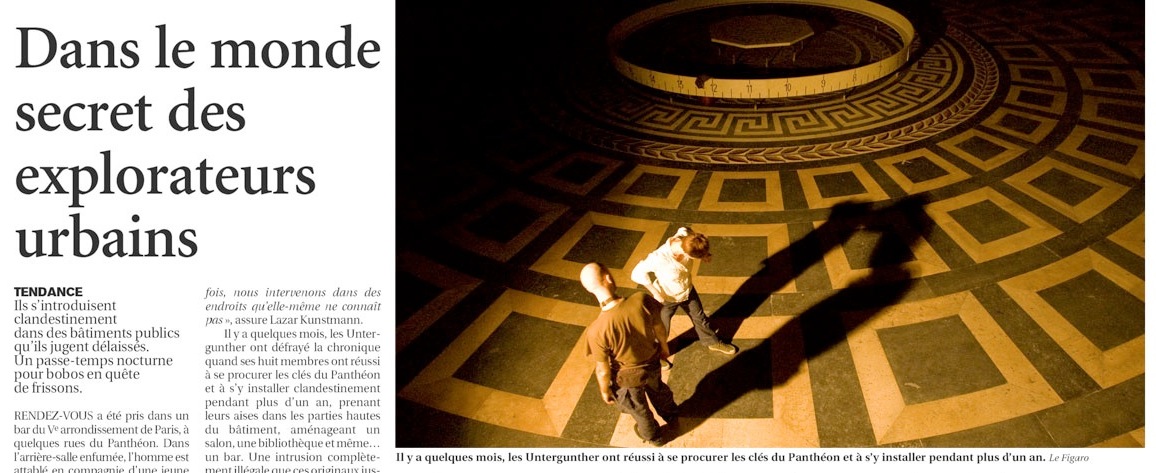
The "Untergunther" underground movement: (illegaly) restoring old monuments of Paris (image via http://web.mac.com/peint/UGWK/Untergunther_Presse.html)
A couple of months ago, I blogged about community brands (not brand communities, which tend to have three distinct traits: (1) members share rituals or traditions, (2) there’s a sense of community, of belonging to a special group so that (3) community members feel morally obliged to help each other). A community brand uses the inverse approach: they emerge from spontaneaous and informal movements, mainly because they grow and gain visibility, so that they have to adopt some kind of unique identity (Cova, Louyot-Gallicher & Bonnemaizon, 2011). Examples are the Slow Food movement, the Burning Man festival or the Couchsurfing community. Continue reading →
Former Threadless CTO gives 5 tips for building communities
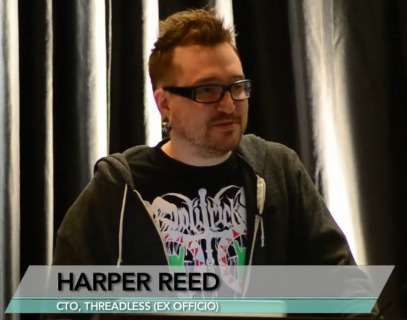
Here’s a very interesting and inspiring talk by Harper Reed (“Probably one of the coolest guys ever“), former CTO of the pioneering t-shirt company Threadless. Threadless is a community-based company that crowdsources t-shirt design and selection, which means that people can (1) submit designs, (2) vote designs up/down… and (3) buy t-shirts! As more and more companies try to leverage communities, let’s listen at someone who succesfully did it. See the (funny) video after the break. Continue reading →
“You have been crowdsourced” – When academics get busted for plagiarism
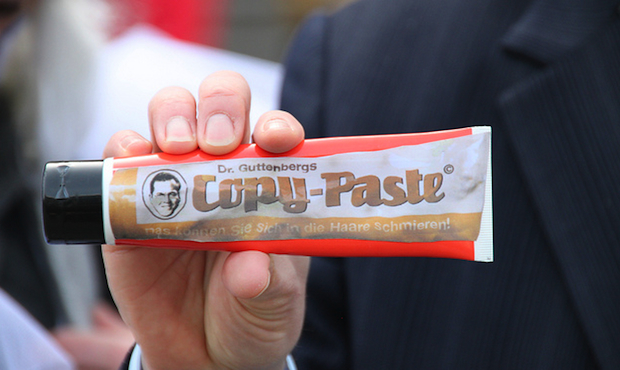
Image via FastCompany.com
In the German newspaper Welt Am Sonntag, I recently stumbled upon a very interesting article which discusses a very hot topic: trust (or not) in the academic world. The title, which could be translated by “Hunting plagiarists per mouse-click“, indicated that we’re again talking about a web-related subject; and indeed the article is all about the wikis that allowed to reveal serious frauds in thesises of highly ranked German politicians. The most famous one was GuttenPlag Wiki, which is closed today… now that the former German Minister of Economics and Defense Karl-Theodor Zu Guttenberg resigned. Who are the people who read thesises to reveal fraudulous passages? Why do they do it? Continue reading →
Will co-creative strategies lead to greater good?

Co-creation, which can be defined as the active, creative and social process of collaboration between producers and consumers, is definitely a trend. What started with pioneering initiatives in IT (Orange and Cisco), sports (Nike+Apple) or commodities (Starbucks) is now seen as a major transformation of business. A recent report showed that ALL surveyed firms considered co-creation to be key in the future, whether it be for innovation, marketing or distribution purposes. A German consultant, Achim Feige, created a matrix called “Good Business Matrix”, which describes businesses along 4 axes. In 2 of these 4 axes (brand community and brand performance), co-creation is considered to be the most advanced level… the “Good Brand”-level. Now are co-creating companies better companies than the others? Continue reading →
 Yannig Roth / This is my personal blog
