I work in marketing, I love sports, culture, creativity and enjoy helping people. I am thankful for much of what life offers, and am getting better at dealing with the unexpected :-) This blog is a way to share some of my passions, reads and thoughts. Don't hesitate to reach out to me, on this blog or social media.
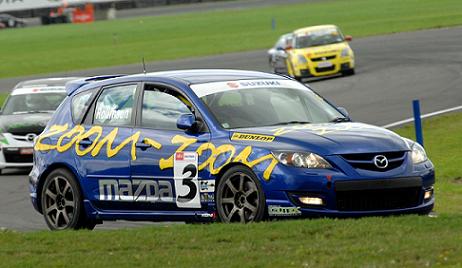
While watching some Eurosport videos, I was “forced” to watch a commercial for the last Mazda, they have to get the money from somewhere anyway… Like on every commercial since 2006, there’s a child whispering “zoom zoom” at the end, and for the first time since then I asked myself : why Zoom-Zoom ??? Is it for the buzz, or is it a wink to something I’m supposed to know about ? None of all that, it’s something that the Japanese love to do : creating a philosophy.
After releasing this press release before the Frankfurt Motor Show 2005, Mazda wanted to prepare people to their concept car Mazda Sassou which stood for simplicity and fun. Instead of this, the attention of the public was turned to the numerous “zoom-zooms” that punctuate the press release. The following video issued by Mazda shows what it is supposed to mean. Nothing in particular actually.
That’s the Zoom-Zoom spirit… If you still haven’t figured it out, then Masahiro Moro may will help you. He now is nowadays in charge of Marketing & Sales at the Mazda HQs but at the time he was the the vice-president of the European marketing business of the brand. Back then, he explained that it is like “the exhilaration we felt as a child shooting down a hill on our bike, this is what Zoom-Zoom means at its most basic level“. And that is what is brilliant about the slogan : it brings over emotions. That what modern marketing is all about.
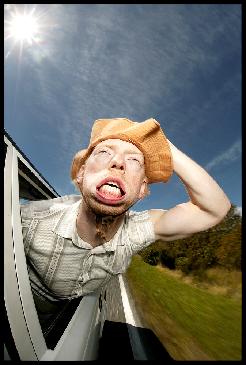
As M. Moro -who looks quite Zoom-Zoom I must admit- explained, it’s “that shiver of movement that Mazda wants to offer with each of the cars we conceive and manufacture“. And to convey that young and passionate image of the Japanese brand, they launched a photo competition with the theme : Zoom-Zoom ! Even though some of the participants must have had some severe difficulties to take such a picture, the competition worked out quite (over 7000 snapshots) well and the winner came from Germany. He won a Mazda Roadster MX-5. See the other winners here.
So today we learned what that Zoom-Zoom slogan meant, or at least what it stand for. Small test : do you know whose slogan these are ?
The link between the automotive and bicycle industry is obvious : using man-made technology to get you from A to B as fast as possible, or at least faster than by foot or on a horse ! Since then, numerous automotive brands issued bikes with more or less commitment, and here are some of these bikes :
Ferrari : one of the most prestigious car manufacturers teams up with the Italian Colnago for several years now, which undoubtfully makes sense, as opposed to some of the following bikes. This year’s bike CF7 which is presented on the video on the left once again demonstrates the craftmanship of Colnago (handmade in Italy) and the design and engineering skills of the Ferrari crew in Modena. Only 99 copies will exit Colango’s factories in 2009, at a price of USD 17,500 each (of course!).
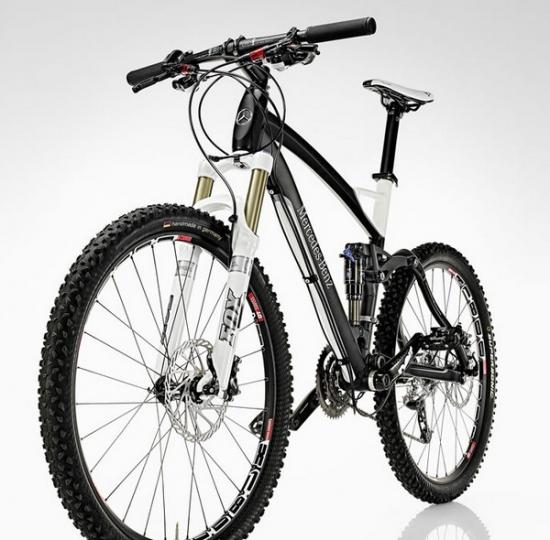
The noble German car manufacturer Mercedez-Benz is back in bike business ! In collaboration with ADP Engineering (the company based in Dietzenbach that also engineers Rotwild bikes), the merchandising branch MB Accessories GmbH created this high-end full-suspension mountainbike, as well as road bikes and foldable bikes which look as awesome as this Trailblazer model. The bikes are limited editions and sold only in Mercedes-Benz venues around the world, asking some USD 4,000 for the mountainbike that you can see here. If you want to purchase one of the numerous bikes that the German offer, check this out !
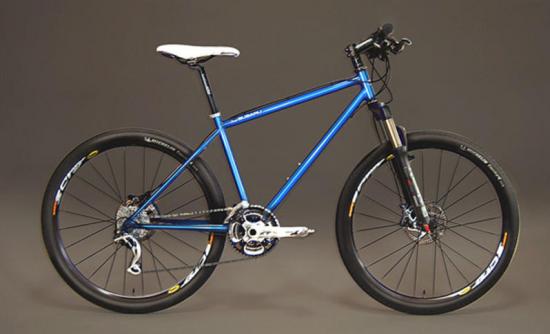
Subaru also shows some interest in cycling. The japanese car brand owned by Fuji Heavy Industries Ltd. will outsource the production of its XB steel hardtrail to a japanese company. The 99 available bikes can only be ordered and will cost about UDS 3.900, which I find quite expensive for a chromoly hardtrail. The guys from the Subaru-Gary Fisher MTB Team are cleverer using high-end Gary Fisher bikes for their races in America, as the French riders from the Subaru MTB Pro Team use Mondraker downhill machines !
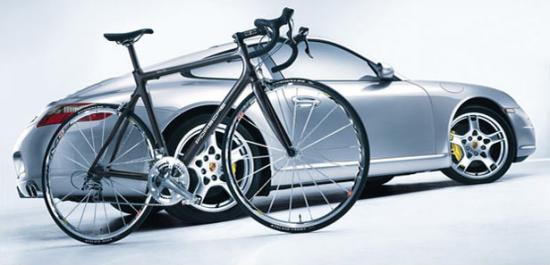
Porsche doesn’t only produce cars, but also markets numerous other products like mobile phones, watches, luggage or fashion via the brand Porsche Design. The bikes are nowadays manufactured by Storck, since the former supplier Votec ran out of business. Porsche gives them the specifications and thanks to their famous know-how, Markus Storck and his team produces the over-priced but gorgeous bicycles.
Still on the top level of the range, the Brits from Land Rover make surprisingly good mountain bikes as well as urban and city bikes. Once again, production is entrusted an external supplier, in this case 2×2 Worldwide, official licensee for Land Rover on the bike business and known in the UK for distributing Vario mountain bikes from France. The official website shows how serious Land Rover takes the sidestep into the two-wheel industry, offering a range going from a beefy downhill competitor with internal shifting to a carbon XC racer called Vorbano.
Another example is given by Chrysler’s brand Jeep[web]. The bikes are low-priced and sold on the mass market (like the retailer giant Carrefour for France) and the product range doesn’t make much sense. I think they could have exploited their “offroad”-image in a better way to build up a strong brand image on the bicycle market, but the products are still acceptable. Jeep bikes are assembleded by the French company Planet Fun based in Périgny near La Rochelle (France) who acquired the rights for using the name directly at Jeep. As I said, Jeep bikes are sold in Carrefour supermarkets in France and the company specialized in cheap bike assembly, but they also assemble higher-priced bikes like Mongoose (license).
The French Peugeotmakes bikes for real, and their track record in the bike industry is quite impressive. Since 1886, when the frenchman Armand Peugeot launched production of a bicycle in the factory of Beaulieu, Peugeot manufactures bikes as well as scooters. When facing difficulties in the 80’s, the bike business was sold to Cycleurope (Gitane, Raleigh, Bianchi etc.) but rapidly they brought back bike assembly to Mandeure, where Cycles Peugeot still assembles its bikes. Today, Peugeot bicycles are sold in the retailer network of the car manufacturer.
The first stupid licensing comes from the Italian Tonino Lamborghini. Like the example above, the bike is sold under the control of the merchandising company of the automotive brand. The merchandising branch Tonino Lamborghini was founded by the son of Ferruccio Lamborghini (founder of Automobili Lamborghini in 1963), and sells various products like fashion goods, tools and even an energy drink [see here]! This bike is sold on the mass market, if you live in the UK you just will have to run into the next Tesco store [webstore]. The “Toro” is available in an awful green and costs £240, and certainly isn’t “worthy of the Lamborghini brand” as Tesco says in the product description.
The “GMC Topkick Dual-Suspension” mountainbike is distributed by Kent Bicycles who seems to specialize in selling cheap bikes on the US market under prestigious names like GMC (General Motors Truck Company, currently selling SUV’s in America and the Middle-East), Cadillac or… Tonino Lamborghini.
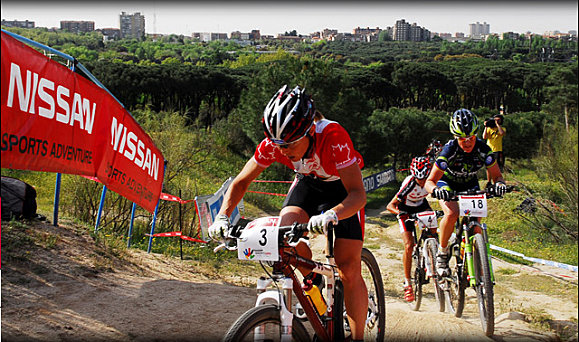
I can’t finish this thread without talking about brands from the automotive industry sponsoring the bike business. When I think about cycling, I can’t avoid the commitment of Skoda in numerous road races (Tour de France since 2004, UCI Road World Championships etc.) and pro cycling teams (Euskadi-Euskaltel, Cervélo Test Team etc. or see [here]). According to the Czech brand owned by Audi AG (owned by the Volkswagen Group), the global partnership with cycling improves brand image, brand knowledge and of course in allows them to introduce new models. Furthermore, we can quoteNissan who sponsors many famous events[Nissan UCI Mountainbike World Cup worldwide, Nissan MTB in northern Europe etc.].
None of the automotive giants makes bikes from A to Z, but who does this anyway nowadays? We can see in these few examples that some of them make gorgeous bikes, allocating eingineering and marketing ressources to issue high-end products. As the cars, the bikes are status symbols which can be sold overpriced to wealthy customers. For the others, it seems to be all about selling a name to the next best company and walking away. As a bike enthousiast, I don’t really understand the strategy of the second group. Raising brand awareness or even brand loyalty can’t be their main intention, does it?
Jusqu’à dimanche prochain, les Internationaux de France vont se disputer dans les stades de Roland Garros. Seul tournoi du Grand Chelem disputé sur terre battue, il porte le nom de Roland Garros, diplômé d’HEC au début du siècle et sportif passionné. A côté du cyclisme, il fut également footballeur, rugbyman, tennisman et aviateur, et à chaque fois à très bon niveau… Il déceda à l’âge de 30 ans seulement dans un accident d’avion, le 2 octobre 1918.
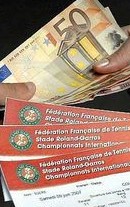
Bref, toujours en est-il que le tournoi qui porte aujourd’hui son nom est un évènement central du calendrier sportif mondial, et le business contribue largement à ce succès. Pour cette édition 2009, la marge bénéficiaire de l’évènement devrait atteindre 50% ! Le directeur des licences et partenariats de la FFT explicite le business model du tournoi de la manière suivante : “générer des revenus en vendant des droits d’association à des marques“. Tout simplement. Parmi les partenaires de la fédération, on pense en premier à BNP Paribas qui débourse autour de 20 millions d’euros par an pour s’associer au tennis français, et a donc le droit au statut de premier partenaire de Roland Garros. Ensuite, les partenaires secondaires comme Europe 1, Perrier, Lacoste, Peugeot,FedEx et autres IBM éspèrent bénéficier également de l’image moderne et internationale de la manifestation. Associés aux produits dérivés, ces recettes marketing représent la majeure partie des revenus des French Open. Viennent en plus les droits télé et la billetterie.
Effectivement, les spectateurs potentiels (et réels) sont très nombreux, surtout en France où la Fédération Française de Tennis rassemble plus de 1,2 millions de licenciés et recence plus de 2 millions de joueurs réguliers. Les occasions de voir(ODV, ou opportunity to see) les marques sur les écrans de télévisions français ou directement au bord des courts sont donc très nombreuses. Non-seulement les partenaires améliorent leur capital cognitif (notoriété) et affectif, mais ils contribuent également à financer le tennis français. Pas moins des 2/3 des revenus du seul tournoi de Roland Garros reviennent à la FFT, qui finance ainsi ses activités nationales et les ligues locales. Le “premier” tiers des revenus permettent d’assurer les investissements nécéssaires au tournoi. La FFT paye d’ailleurs un tarif très bas à la ville de Paris pour utiliser les terrains (1,5 million d’euros/an) dont le loyer devrait s’élever à 19 millions d’€ ! [e24]
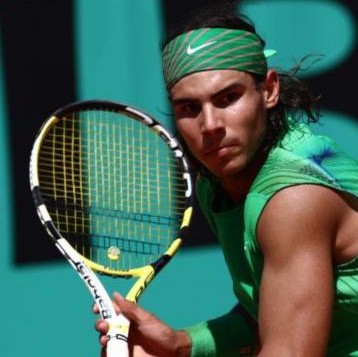
Finalement, ce marché du tennis attire les investissements des équipementiers. Voir Rafael Nadal ou Dinara Safina jouer avec une raquette Babolat est en effet très bon pour la notoriété et l’image de la PME lyonnaise, pionnière dans le tennis. Confiant malgré la crise, Eric Babolat affirme que le budget du sport est “le dernier budget que l’on coupe, car [le tennis] un sport de passionnés, très lié à l’univers familial“. La marque investit 10% de son CA dans les partenariats et même si ces investissements marketing ne reviennent pas directement aux tournois, ils contribuent à faire vivre le tennis professionnel, et donc à entretenir la compétitivité du sport aux yeux d’un public exigeant.
Petit à-parté : J’ai découvert que la marque TBS, aujourd’hui souvent associée aux sports nautiques, est basée dans le Maine-et-Loire, entre Nantes et Angers. Née dans les années 1970, elle est à l’origine du revêtement en terre battue synthétique (tbs…) et s’est ensuite diversifiée dans les chaussures de tennis, avant d’investir les pontons français et internationaux.





 Yannig Roth / This is my personal blog
