I work in marketing, I love sports, culture, creativity and enjoy helping people. I am thankful for much of what life offers, and am getting better at dealing with the unexpected :-) This blog is a way to share some of my passions, reads and thoughts. Don't hesitate to reach out to me, on this blog or social media.
J’ai récemment lu une interview de Ellen Bark, responsable innovation chez Heineken, parlant de la stratégie d’innovation ouverte au sein de l’entreprise. Cette interview est publiée sur PSFK, en anglais, et je trouvais intéressant de la traduire en français pour la rendre accessible à davantage de personnes. Ce qu’elle dit est intéressant dans le sens où Heineken utilise le crowdsourcing via divers plateformes, comme je soulignais déjà en septembre 2011. Depuis, d’autres plateformes ont été lancées, et l’interview révèle bien la maturité de la marque lorsqu’il s’agit d’utiliser les idées de la foule pour le marketing et l’innovation. Voici la traduction de l’entretien (les illustrations ont été ajoutées a posteriori). Continue reading →
Here’s a great talk by Seth Cooper and Firas Khatib (University of Washington) who describe the massive possibilities of crowdsourced games like Foldit (“Solve Puzzles for Science“) at TEDx Panthéon Sorbonne. Foldit, which results from part of an experimental research project from the University of Washington, is an online puzzle video game about protein folding centered around folding the structure of selected proteins to the best of the player’s ability (see it in action in this video).
It received big coverage recently when Foldit gamers have helped unlock the structure of an AIDS-related enzyme that the scientific community had been unable to unlock for a decade. The resulting research paper, Crystal structure of a monomeric retroviral protease solved by protein folding game players (PDF), has been published in Nature and is co-authored by the participating Foldit teams “Foldit Contenders Group” and “Foldit Void Crushers Group.” A great example of the power of crowd-based collaboration!
Update (Feb 12th 2013): Another research paper has just been published in Nature, showing that using crowdsourcing platforms such as TopCoder, an alternative to Foldit, yields a whopping 970 fold increase in speed for big data genomics sequencing algorithm. Here’s the citation: Lakhani, K. R., Boudreau, K. J., Loh, P.-R., Backstrom, L., Baldwin, C., Lonstein, E., Lydon, M., et al. (2013). Prize-based contests can provide solutions to computational biology problems. Nature biotechnology, 31(2), 108–11. doi:10.1038/nbt.2495
As articles on Campaign disappear after a couple of days, being only available to paid subscribers, I thought I would do a blog post about Skoda’s latest co-creation/crowdsourcing initiative in China: the www.congmingzhuyi.com platform. It’s Campaign China that reports about this initiative, orchestrated by Leo Burnett Shanghai, that aims to gather consumer ideas about making driving, both inside and outside of the vehicle, more fun. Continue reading →
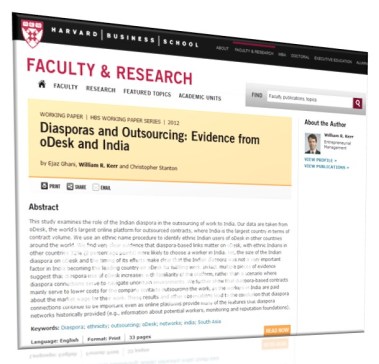
Crowdsourcing fundamentally transforms the way we work, particularly in creative industries or – on the other hand – in the execution of low-qualification tasks with platforms such as MTurk or oDesk. I’ve recently read a working paper about the latter, the marketplace for work oDesk (which has an army of researchers, mostly to analyze log data, see these cool visualizations). This paper particularly seeks to understand how culture impacts the attribution of work to people via oDesk. Or in other words: Do Indians from abroad attribute work more to Indians from the home country than to others, with similar qualification?Continue reading →
The world’s first timeline of crowdsourcing by brands is being constantly updated with past and present cases, and there are now more than 200 crowdsourcing initiatives featured – lots more to come (I just need to find the time…)! In this post, I’d like to present one of the first crowdsourcing examples that has been of strategic importance for a brand in a local market: Pepsi’s Creative Challenges in China. Even before the well-known Pepsi Refresh Project, this series of crowdsourcing initiatives have allowed the brand to get consumers’ attention in the country. Here’s how. Continue reading →
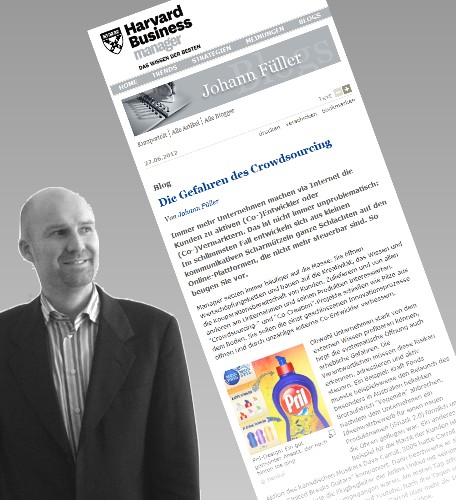
Johann Füller is CEO of Hyve AG, a company that organizes crowdsourcing for co-creation and/or open innovation purposes, and professor at the University of Innsbruck (Austria)
I already blogged about academic articles in French that should have been translated into English, because they’re pretty darn interesting and useful for people interested in co-creation or user innovation. This post is about a blog post that Johann Füller, an experienced researcher and businessman, wrote in German on Harvard Business Manager. It’s called Die Gefahren des Crowdsourcing (The Dangers of Crowdsourcing) and highlights some of the dangers that brands should be aware of before kicking off a crowdsourcing campaign. Not only does he give some examples, but he also cites 3 often encountered sources of crowd-resistance, as well as 5 ways to avoid failures. This post is an unedited translation, I only changed the illustrations and added a couple of links in the text.Continue reading →
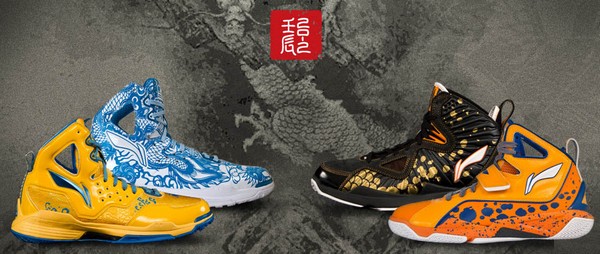
Li Ning’s “Year of the Dragon” collection is specifically targetted towards the Chinese consumer (image via solecollector.com)
Currently my PhD work is taking an interesting direction: how does crowdsourcing work across borders? I just blogged about a crowdsourcing experiment in China, and about evidence from Mechanical Turk, and in this post I’d like to share the findings of a paper that looked at creative expression across cultures: A Comparison of Creative Behaviours in Online Communities across Cultures (Jawecki, Füller & Gebauer, 2011). To my knowledge is one of the few papers today to compare creative consumer behaviour across cultures. “We find that culture does have an influence on creative processes and expressions“, the authors say. Here’s why. Continue reading →



 Yannig Roth / This is my personal blog