Two videos by leading co-creation vendors: projects & people

Why do people participate in co-creation & Where do you find them

Answering these questions basically leads to one answer: COMMUNITIES


Forrester Research recently issued its Forrester Wave™ about Co-Creation vendors in 2011.This report can help consumer product strategy professionals to choose a vendor to work with in idea generation or content creation projects, and compares 6 actors of the field: eYeka (Paris, France), jovoto (Berlin, Germany), Hyve (Munich, Germany), ChallengePost (New York City, USA), Redesignme (Eindhoven, The Netherlands) and NapkinLabs (Boulder, USA). This post is not about the report (download it for free here) but about two neat videos released by Hyve and eYeka recently, check it out… Continue reading →
Pourquoi le pâté Le Hénaff a fait du marketing participatif sur une plateforme… suédoise

screenshot-contest-page

Image via mypitch.com

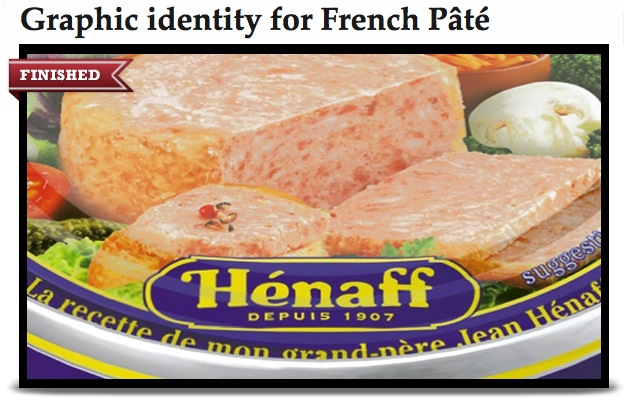
Le marketing participatif est en vogue, on pourrait même dire qu’il a atteint une certaine phase de maturité. Un expert a récemment dit à propos de Coca-Cola que la marque atteignait sa “maturité sociale” puisqu’ils veulent missionner une agence qui surveillerait la e-réputation de la marque au niveau global. L’opération que j’ai découverte récemment sur le site MyPitch.com m’a cependant laissé un peu perplexe: l’année dernière, une marque bretonne (Hénaff) a demandé à des créatifs inscrits sur une plateforme suédoise (MyPitch) de proposer une identité graphique pour une nouvelle marque de produits tartinables bio… WTF? Continue reading →

One brand, different platforms (Part 3) Coca-Cola unleashes passion and engagement

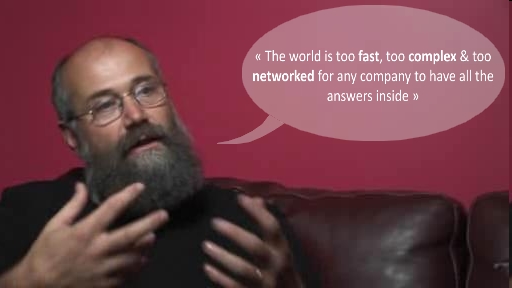
The world is too fast, complex and networked for any company to have all the answers inside

Yochai Benkler, author of The Wealth Of Networks

In the previous weeks, I blogged about co-creative initiatives of Danone and three different co-creation engagements of Heineken. While the examples I used shows how Danone choses according to the local/global scope of co-creation projects, Heineken’s choice seems to focus more about the specialization of the co-creation platforms they work with, from calling for ideas to managing a whole on/offline process. The part of our series about the way online platforms are being used as intermediaries by brands, we’ll have a look at  Coca-Cola, which is renown to be a brand people get passionate about. Such a global brand just has to co-create since a lot of its value lies in peoples’ emotional engagement. Here are a couple of examples:

logo small Continue reading →

One brand, different platforms (Part 2) Heineken builds on deepness of engagement

The world is too fast, complex and networked for any company to have all the answers inside

Yochai Benkler, author of The Wealth Of Networks

Last week, we highlighted co-creative initiatives of Danone and their preference for global/local communities. As a second part of our series about the way online platforms are being used as intermediaries by brands, we’ll have a look at Heineken, and three different co-creation campaigns run with different actors of the field – and on different platforms, including facebook. Continue reading →

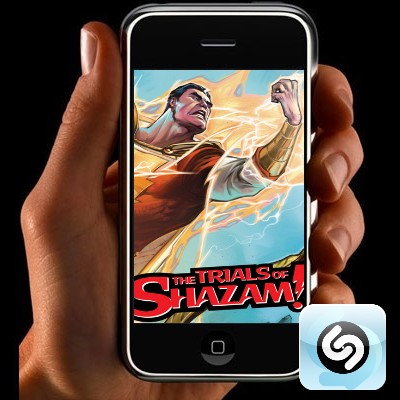
The Shazam-effect in marketing: when “push” and “pull” strategies become obsolete

shazamization

Before turning into a super-hero, Captain Marvel pronounced the magic word "shazam" (which stands for Salomon, Hercules, Atlas, Zeus, Achilles and Mercure)

Steve Jobs’ genius was to combine existing technologies in an innovative manner to create seamingless browsing and multimedia experiences. Now, Apple sells its hardware with a price premium for which a lot of people are willing to pay, and it will stay like this in the future. The people from Shazam revolutionized media consumption in their way too. By allowing us to tag music whenever and whereever we are (as soon as we are connected to the internet), this application is symptomatic of a shift in our consumption: it has become ubiquituous and instantaneous. That’s what two French researchers describe in a recent paper, the call it the “shazamization”. Continue reading →

One brand, different platforms (Part 1) Danone builds on geographic diversity

The world is too fast, complex and networked for any company to have all the answers inside

Yochai Benkler, author of The Wealth Of Networks

It is the mantra of open innovation advocates: go find outside what you’re unable to figure out by yourself. What started in the scientific field with success stories like InnoCentive or NineSigma, now spreads to product development and marketing. Companies source more and more ideas directly from consumers, with online platforms being the only intermediary, with the logical consequence of an explosion of web-based platforms. Today, distinctive positionings emerge within this new competitive landscape (which is a situation of healthy competition, I think) and brands don’t hesitate to leverage different platforms for different purposes.

This series of posts sheds light on a couple of brands that use that platforms’ in a complementary manner. This week, I take a look at Danone, for which I identified three different co-creation platforms.

logo-big

Continue reading →

Money-making platforms are rare: the cost of co-creation

screenshot

When Hyve retweeted Sense (two renown co-creation consultancies), I thought the information must really be interesting. And it was. A report about Winning and Failing Co-Creation Platforms which compares 20 different platforms by interest, community scope or interaction tools.

Even though the report does have some flaws, its conclusion is very insightful and concludes that “money-making platforms are rare“, which is perfectly true. To generate cash, companies either have to sell community-output (like Quirky or Local Motors) or make big companies pay for using the platforms (like eYeka or InnoCentive). Co-creation, Open Innovation, Crowdsourcing… all these iniatives bear costs that can’t be neglected ! Continue reading →