Crowdsourcing and Marketing: Should companies try to target specific audiences?

crowds

Crowdsourcing and marketing, a tough equation to solve. Why? Because crowdsourcing is about openness whereas marketing is about targeting; crowdsourcing offers serendipity when marketing is looking for predictability. Brands often want to target a specific target audience: “Can you only ask Chinese people to participate?” or “Is it possible to accept only the users of my product?” or even “I want only ideas from women from 25 to 35 years, is that possible?” are questions that often get asked while discussing the possibility to launch a crowdsourcing project. The truth is that the internet is a global medium and that everyone can potentially participate in a crowdsourcing challenge. Targeting is difficult, and only few succeeded. Continue reading →
Consumer creativity across cultures: the case of basketball fans

sneakers

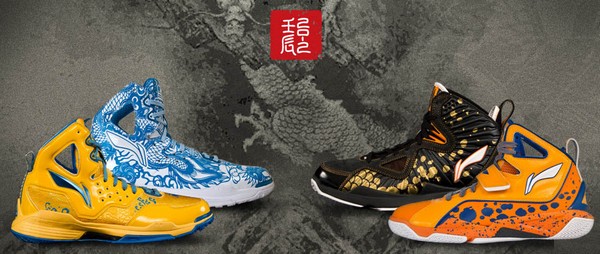
Li Ning’s “Year of the Dragon” collection is specifically targetted towards the Chinese consumer (image via solecollector.com)

Currently my PhD work is taking an interesting direction: how does crowdsourcing work across borders? I just blogged about a crowdsourcing experiment in China, and about evidence from Mechanical Turk, and in this post I’d like to share the findings of a paper that looked at creative expression across cultures: A Comparison of Creative Behaviours in Online Communities across Cultures (Jawecki, Füller & Gebauer, 2011). To my knowledge is one of the few papers today to compare creative consumer behaviour across cultures. “We find that culture does have an influence on creative processes and expressions“, the authors say. Here’s why. Continue reading →

Crowdsourcing in China : Learnings from the “Red Mat” design experiment

cover

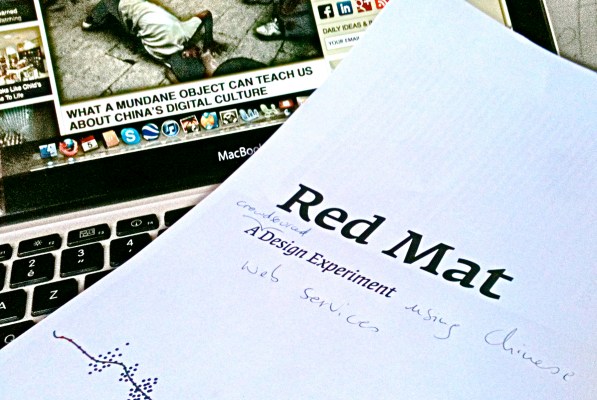
On this blog, I’ve already blogged about crowdsourcing across cultures and crowdsourcing on Chinese platforms. To be honest, it’s a topic that I would like to explore further on my PhD work, because there seems to be few research about this. This post relates some findings of a design expermiment called Red Mat, which is a personal project of Jan Chipchase, who is also Executive Creative Director of Global Insights at Frog Design. I found out about the Red Mat project on PSFK, but at first I didn’t really understand what it was about… Now I see that it’s an exploratory project that heavily involved the use of Chinese crowdsourcing services. Here are some of the learnings… Continue reading →

David Butler, Coke’s VP of Design about crowdsourcing

David Butler_Coca-Cola Design+ Award from jovoto on Vimeo.

Check out this great video from the German crowdsourcing company jovoto. They’re holding a contest for Coke at the moment, and it’s a great interview of the company’s VP of Design, David Butler. I already mentioned him in a past blog post about the Freestyle Fountain, and if you’re interested in what he’s doing, check out Fast Company’s page (it’s a little bit outdated, but still relevant). This video interview is very insightful, especially regarding branding, design and crowdsourcing. I particularly like the emphasis that he puts on the cultural aspect of crowdsourcing i.e. peoples’ different approaches of the same problem across cultures. Comments are welcome!

“La culture en clandestins”, le livre sur la rénovation de l’horloge du Panthéon

coupole et livre

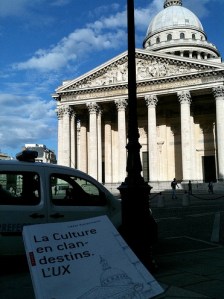
La coupole du Panthéon, vu du coin droit en remontant la rue Soufflot. Sur la photo, on peut voir une voiture de la préfecture de police... dont l'UX se moque tant dans le livre

Ça fait longtemps que je n’avais plus écrit un billet en français sur ce blog, surtout concernant autre chose que la co-création, les plateformes communautaires ou mes poissons d’avril. Mais voilà, je suis maintenant parisien, et je voulais partager quelques passages d’un livre superbe sur Paris: La Culture en clandestins. L’UX. En fait, j’ai déjà abordé l’UX dans un billet précédent sur les marques de communautés, qui avaient été abordés dans un très bon livre de Bernard Cova. Vous n’avez put-être pas encore entendu parler de l’UX, mais peut-être avez-vous entendu parler de la rénovation (clandestine) de l’horloge du Panthéon, de 2005 à 2006? Partant du principe qu’une autorisation officielle serait trop longue et compliquée à obtenir, un groupe de passionnés du patrimoine a décidé de rénover cette partie invisible du patrimoine, au nez et à la barbe de l’administration du patrimoine. Dans ce livre, le porte-parole de ce groupe, raconte cette passionnante aventure… en se moquant de l’ignorance des responsables officiels! Continue reading →