Call For Papers: 13th E-Marketing Research Conference (Sorbonne) in September 2014

The Amphithéâtre Oury (or "Amphi de Gestion") where the conference takes place

The Amphithéâtre Oury (or “Amphi de Gestion”) where the conference takes place

Would you like to come to the Sorbonne? Are you teaching and/or research topics related to web-marketing, digital marketing, internet consumption, consumer behavior, or other related topics? On September 12th 2014, the Interdisciplinary Management Research Lab (PRISM) of the University Paris 1 Panthéon Sorbonne (where I am PhD student) organizes a research conference with the support of the French Marketing Association (AFM) and ESSCA Ecole de Management. Here’s the call for papers. Continue reading →

Getting Consumers’ Attention Becomes More Expensive (#Advertising #Research)

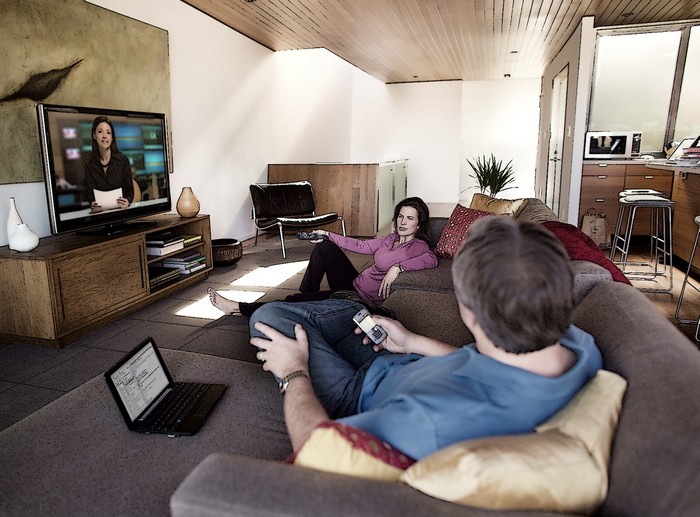
Consumers are looking at more screens. One of many reasons that explain the rise of consumer attention (photo via cisco.com)

Consumers are looking at more screens. One of many reasons that explain the rise of consumer attention (photo via cisco.com)

The quality of consumer attention has been falling for decades, and consumers find product informations on the web rather than on TV these days. That what’s Thales Texeira, assistant professor in Harvard Business School’s Marketing Unit, explain sin a recent working paper. What can marketers do about that? Beefing up advertising or setting up price promotions can have negative effects on current profits and future revenues. Hence, Texeira says that marketers should focus on reducing cost (create & distribute advertising for less money, using crowdsourcing, for example) or on increasing quality (create better ads and tailoring them to increase conversion). Continue reading →

Crowdsourcing As A Way to Get Creative Ideas and Content – #SEMPL15

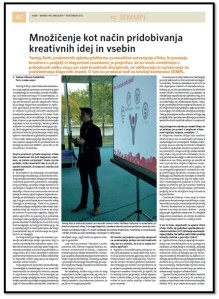
Click to see article (PDF)Any Slovenian-speaking readers of this blog? If yes, the click on the image left to read “Množičenje kot način pridobivanja kreativnih idej in vsebin,” which could be translated into “Crowdsourcing as a way to get creative ideas and content,” published in the Slovenian Marketing Magazin before SEMPL15, where I’ll speak about crowdsourcing in video advertising at the end of this month.

Simona Kruhar Gaberšček told me that crowdsourcing doesn’t have a translation in Slovenian, and that they chose to call it množičenje, a word that is almost unknown by Google Search, even though Google Translate tells me it’s close to the Slovenian for Dowel. Anyway. For those of you who don’t talk Slovenian, here’s the translation of the interview (links have been added by myself). Continue reading →

Interview of @ChrisKuech (Frito-Lay) About Crash The Super Bowl VIII

Chris Kuechenmeister, one of "40 under 40 to watch" in 2011, according to PRweekUS.com

In 2011, PRweekUS.com cited Chris Kuechenmeister as one of “40 under 40” to watch in public relations

A week ago, PepsiCo launched the 8th edition of the Crash The Super Bowl contest, probably the world’s most famous, open-to-all video advertising competition. For the eight year, PepsiCo invites individuals to compete to have their own Doritos ads air in front of millions during Super Bowl XLVIII, the pinnacle of television advertising. What’s new this year? Doritos is opening Crash The Super Bowl (CTSB) up to the whole world, or at least to any of the 46 countries where Doritos are sold.

To talk about this latest evolution, but also about the general strategy of relying on consumers for the production of advertising content, I had the great pleasure to talk to Chris Kuechenmeister, Senior Director of Public Relations at Frito-Lay North America (which is part of PepsiCo). He kindly replied to my tweet and we had a very interesting chat on Monday. Here’s his insider perspective on this pioneering crowdsourcing initiative. One question a day. Continue reading →

My Review of “How Emerging Market Brands Will Go Global”

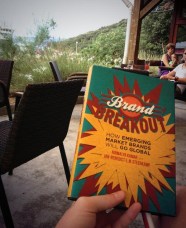
brand-breakout-bookIn October 2009, I covered the publication of the Best Global Brands ranking, underlining that none of the 100 brands came from emerging market countries in 2009. In one part of the report, called “Tomorrow’s Brand Leaders, Up-and-Coming Global Brands,” Interbrand China’s Jonathan Chajet nevertheless listed a couple of brands that could become global in a near future, like companies from China (Lenovo, Haier, Tsingtao), India (Tata, Reliance, ArcelorMittal), Russia (Kaspersky Lab, Aeroflot, Gazprom), South Africa (MTN, Anglo-American, SABMiller) and Brazil (Itaù, Vale, Natura). You can see some of them in my post (even if it’s written in German).

Some of these brands, like Lenovo, Haier, or Natura, are presented in a fascinating book called Brand Breakout: How Emerging Market Brands Will Go Global, by N. Kumar (London Business School) and J-B. Steenkamp (University of North Carolina), which I just finished reading. Based on extensive field and desk research, the authors present 8 strategies that brands are taking to go global (the Brand Aquisition Route for Lenovo, the Asian Tortoise Route for Haier or the Natural Resources Route for Natura, for example).

Continue reading →

How Crowdsourcing is Used in Video Advertising

My presentation at the IMMAA Conference in Lisbon (you can turn up the volume, it’s a little low)

Broadband internet coverage, mobile internet access, ubiquitous mobile devices… a variety of factors allow us to consume video more than ever before in the young internet history. Brands have discovered that video advertising is seen as a particularly effective way to promote their products and services. WARC recently reported that brands’ spending on online video advertising is expected to increase 41% in 2013 to $4.1 bn, according to figures from eMarketer.

But how can they produce quality video content at an affordable cost? One way to do that is to crowdsource video content production. In other words, launch online video contests. How is crowdsourcing used in the production of video advertising today? In an attempt to understand this subject better, Rosemary Kimani and I have written a book chapter about it. We have identified 4 crowdsourcing models in the current video advertising landscape. Continue reading →

Advertising Contests in the 1950s and 1960s (The Contest Era)

The book cover (left) and the movie poster (right)

The book cover from 2001 (left) and the movie poster from 2005 (right)

It’s easy to forget how long companies have been inviting ideas from ‘the crowd,’” says Julia Kirby in her HBR article Creative That Cracks the Code the Code. “If you’re in doubt, read The Prize Winner of Defiance, Ohio, a memoir of 1950s America in which the author’s mother writes advertising jingles for contest after contest.” This excerpt caught my interest, and I rushed to Amazon to buy the book (2001) and the movie (2005). I’ve just finished both and learned an awful lot advertising contests in the 1950s and 1960s, decades of prosperity in which companies fueled consumption and promoted the American Way of Life with creative contests. Continue reading →