Two videos by leading co-creation vendors: projects & people

Why do people participate in co-creation & Where do you find them

Answering these questions basically leads to one answer: COMMUNITIES


Forrester Research recently issued its Forrester Wave™ about Co-Creation vendors in 2011.This report can help consumer product strategy professionals to choose a vendor to work with in idea generation or content creation projects, and compares 6 actors of the field: eYeka (Paris, France), jovoto (Berlin, Germany), Hyve (Munich, Germany), ChallengePost (New York City, USA), Redesignme (Eindhoven, The Netherlands) and NapkinLabs (Boulder, USA). This post is not about the report (download it for free here) but about two neat videos released by Hyve and eYeka recently, check it out… Continue reading →
One brand, different platforms (Part 3) Coca-Cola unleashes passion and engagement

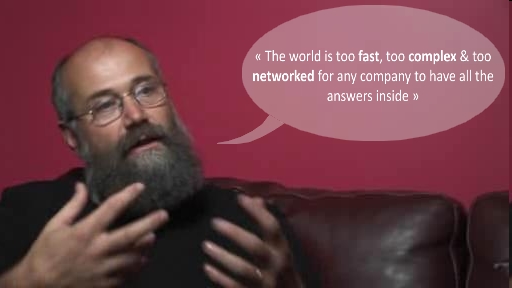
The world is too fast, complex and networked for any company to have all the answers inside

Yochai Benkler, author of The Wealth Of Networks

In the previous weeks, I blogged about co-creative initiatives of Danone and three different co-creation engagements of Heineken. While the examples I used shows how Danone choses according to the local/global scope of co-creation projects, Heineken’s choice seems to focus more about the specialization of the co-creation platforms they work with, from calling for ideas to managing a whole on/offline process. The part of our series about the way online platforms are being used as intermediaries by brands, we’ll have a look at  Coca-Cola, which is renown to be a brand people get passionate about. Such a global brand just has to co-create since a lot of its value lies in peoples’ emotional engagement. Here are a couple of examples:

logo small Continue reading →

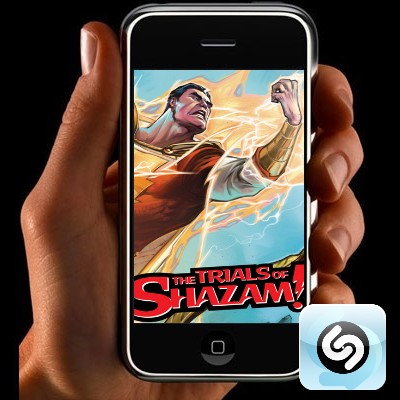
The Shazam-effect in marketing: when “push” and “pull” strategies become obsolete

shazamization

Before turning into a super-hero, Captain Marvel pronounced the magic word "shazam" (which stands for Salomon, Hercules, Atlas, Zeus, Achilles and Mercure)

Steve Jobs’ genius was to combine existing technologies in an innovative manner to create seamingless browsing and multimedia experiences. Now, Apple sells its hardware with a price premium for which a lot of people are willing to pay, and it will stay like this in the future. The people from Shazam revolutionized media consumption in their way too. By allowing us to tag music whenever and whereever we are (as soon as we are connected to the internet), this application is symptomatic of a shift in our consumption: it has become ubiquituous and instantaneous. That’s what two French researchers describe in a recent paper, the call it the “shazamization”. Continue reading →

Money-making platforms are rare: the cost of co-creation

screenshot

When Hyve retweeted Sense (two renown co-creation consultancies), I thought the information must really be interesting. And it was. A report about Winning and Failing Co-Creation Platforms which compares 20 different platforms by interest, community scope or interaction tools.

Even though the report does have some flaws, its conclusion is very insightful and concludes that “money-making platforms are rare“, which is perfectly true. To generate cash, companies either have to sell community-output (like Quirky or Local Motors) or make big companies pay for using the platforms (like eYeka or InnoCentive). Co-creation, Open Innovation, Crowdsourcing… all these iniatives bear costs that can’t be neglected ! Continue reading →

Crowdtap’s Brand Influence metric: my questions

puma-head

Few people will commit to a brand like this little boy... but how to measure brand influence?


I am a passionate reader of FastCompany.com and its design pendant FastCoDesign.com (and I advise you to have a look at it, very inspiring!). Right after publishing a blog post the difficulty of classifying crowdsourcing actors, in which I placed CrowdTap as an example of good measurement/metrics, Fast Company published an article about their last innovation: the Brand Influence Metric. Brand Influence (“the cross-channel metric for marketing impact“) measures the power of any marketing action to impact consumers’ advocacy of the client’s brand and willingness to purchase its products. Does this metric usher a new era for marketing metrics or is it a proprietary metric with limited broad impact? Some questions…

Continue reading →

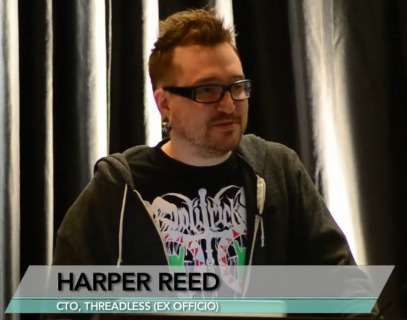
Former Threadless CTO gives 5 tips for building communities

screen-capture

Here’s a very interesting and inspiring talk by Harper Reed (“Probably one of the coolest guys ever“), former CTO of the pioneering t-shirt company Threadless. Threadless is a community-based company that crowdsources t-shirt design and selection, which means that people can (1) submit designs, (2) vote designs up/down… and (3) buy t-shirts! As more and more companies try to leverage communities, let’s listen at someone who succesfully did it. See the (funny) video after the break. Continue reading →

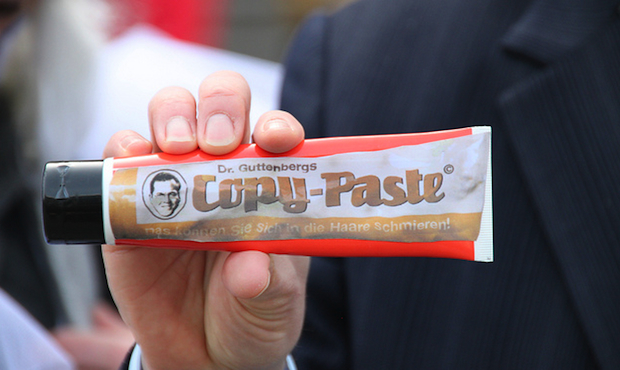
“You have been crowdsourced” – When academics get busted for plagiarism

tube-paste

Image via FastCompany.com

In the German newspaper Welt Am Sonntag, I recently stumbled upon a very interesting article which discusses a very hot topic: trust (or not) in the academic world. The title, which could be translated by “Hunting plagiarists per mouse-click“, indicated that we’re again talking about a web-related subject; and indeed the article is all about the wikis that allowed to reveal serious frauds in thesises of highly ranked German politicians. The most famous one was GuttenPlag Wiki, which is closed today… now that the former German Minister of Economics and Defense Karl-Theodor Zu Guttenberg resigned. Who are the people who read thesises to reveal fraudulous passages? Why do they do it? Continue reading →