11 of the 12 Best Global Brands use creative crowdsourcing

100

Click on the image to get to Interbrand’s poster of the 100 Best Global Brands

UPDATE (Sep 19th 2012): To find a visual and interactive illustration of all the cases listed below, see my timeline of crowdsourcing initiatives by brands

This is going to be a loooooong post – eventually. I will try to list all the creative crowdsourcing initiatives that I know of, applied to Interbrand’s ranking of the 100 Best Global Brands. I eagerly invite you to contribute with your knowledge because I might miss some – what do I say – I will miss some of them. Why list all these crowdsourcing initiatives? I would like this post to be another way to show how big creative crowdsourcing is getting in marketing and innovation. I hope you like it. And again, please share the creative crowdsourcing initiatives (contests, engagement platforms, challenges etc.) that I missed – and let us stick to the brands (not the parent companies). Thanks! Continue reading →
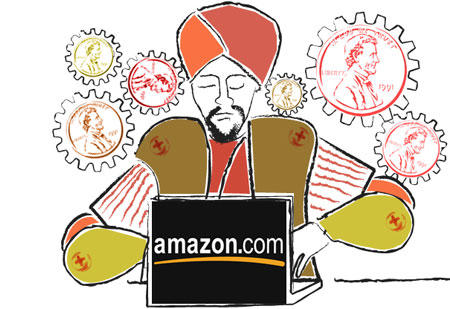
Crowdsourcing across cultures: Recent evidence from Mechanical Turk

mechanical-turk-amazon-illustration

Image via vator.tv

Do you know Mechanical Turk? It’s a web-platform that is hosted by Amazon.com and allows you to perform small (and usually repetitive) tasks and to earn a little money. Everybody can set up a task, and everybody can perform a task, that’s why Mechanical Turk  is called a “marketplace for work” (there are numerous other platforms like this). For the person who sets up a task, it’s like having a human-powered machine that performs tasks for you. And for researchers, it’s a fantastic playing field to explore crowdsourcing because of the sheer amount and diversity of people who perform tasks on the platform for little money! This post highlight three pieces of research that explore why people from India and the United States are active on Mechanical Turk.

Continue reading →

Is Theodore Levitt’s article “Creativity is not enough” still accurate today?

Creativity is thinking up new things. Innovation is doing new things.


I just finished reading Creativity is not enough, an HBR article that Theodore Levitt wrote more than 40 years ago. As the title indicates, the father of globalization theory says the creativity is a good thing, but that companies should not pay too much attention to creative types because they might be harmful to the business. My first thought was “Wow, Theodore Levitt was pretty tough on creatives“… but it’s still an interesting read, especially today where everybody is praising creativity as the panacea for innovation and competitiveness. Here are some excepts of this crusade against creative types, and some thoughts about today’s situation. Continue reading →

Quelques extraits du webinar sur Local Motors et la co-création

Vendredi dernier, le Co-Creation Forum organisait un webinar sur Local Motors, une entreprise dont j’ai déjà parlé sur ce blog. Durant ce webinar (ou slidecast, enfin quel que soit le terme…) on a pu écouter Damien Declercq, directeur du développement commercial de Local Motors, présenter Local Motors ainsi que son rôle au sein de l’entreprise. Damien Declercq est français (Normand même), mais l’ensemble de la présentation a été faite en anglais. Voici quelques passages retranscrits en français pour ceux qui ne maitrisent pas tellement la langue de Shakespeare… ou qui n’ont pas envie d’écouter trois quarts d’heure de webinar! Continue reading →

David Butler, Coke’s VP of Design about crowdsourcing

David Butler_Coca-Cola Design+ Award from jovoto on Vimeo.

Check out this great video from the German crowdsourcing company jovoto. They’re holding a contest for Coke at the moment, and it’s a great interview of the company’s VP of Design, David Butler. I already mentioned him in a past blog post about the Freestyle Fountain, and if you’re interested in what he’s doing, check out Fast Company’s page (it’s a little bit outdated, but still relevant). This video interview is very insightful, especially regarding branding, design and crowdsourcing. I particularly like the emphasis that he puts on the cultural aspect of crowdsourcing i.e. peoples’ different approaches of the same problem across cultures. Comments are welcome!

Understanding participation on a massive crowdsourcing platform

Hompage of crowdsourcing platform TaskCN

As time goes, we can see that crowdsourcing platforms gain momentum and attract both companies (seekers) and consumers (solvers). Some platforms are used to innovate in science (InnoCentive, Hypios, NineSigma), others to connect creatives and companies (Jovoto, eYeka, Poptent), and others are huge marketplaces of work or creative task (Mechanical Turk, Witmart, TaskCN). This blog post is about a piece of research that tries to understand participation on the latter platform: the Chinese marketplace TaskCN. What type of contests work best? Does more money attract solvers? And what role does peoples’ experience play in winning contests? Their finding can have strategic implications for designing online contest. Continue reading →