De la Couverture Médiatique du Sport Féminin (Mémoire de Vanessa Gerst)

"La Course by Tour de France" a été organisée pour la première fois en 2014, et a été remportée par Marianne Vos (image via pelotonmagazine.com)

“La Course by Tour de France” a été organisée pour la première fois en 2014, et a été remportée par Marianne Vos (image via pelotonmagazine.com)

Il y a des pays dans lesquels les femmes peuvent à peine faire partie du public dans des enceintes sportives. Heureusement, ce n’est pas le cas en France, et des efforts sont faits pour promouvoir le sport féminin, à la fois pour les athlètes que pour le public (comme avec La Course, organisée à l’arrivée du Tour de France). Mais il y a encore des inégalités de traitement (couverture médiatique, primes etc.) entre les sports masculins et féminins. Vanessa Gerst, une de mes étudiantes l’année dernière à l’ESSCA, a rendu un très bon mémoire sur le sport féminin dans l’ère du digital. Aujourd’hui stagiaire au sein du pôle Digital & Social Media chez Havas Sports & Entertainment, elle nous explique son travail. En espérant que cela puisse inspirer d’autres étudiants à faire en faire de si bons. Continue reading →

The Stock Photo Model That Wanted To Remain Anonymous

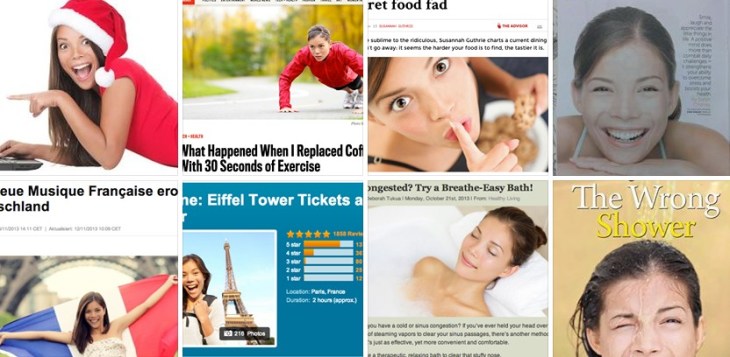
A caption of the "Ariane - The Overexposed Stock Image Model" facebook page (click to see more)

A caption of the “Ariane – The Overexposed Stock Image Model” facebook page (click to see more)

In December 2014, I took part in a debate about crowdsourcing in which one of the attendees, a professional photographer, said that stock photography lowers advertising quality. He wasn’t totally opposed to the concept of crowdsourced stock photography, but said that it leads to lower quality as the diversity of visuals is poor. While I haven’t studies the topic it depth, he has a point, and here’s an example: Ariane.

You MUST have seen her in the last years! “Ariane is so ubiquitous, she has probably entered your subconscious at some point,Placeit notes; even at eYeka we’ve been guilty of it (see here or here). Here’s an example of “technically the most famous model in the world” which is used in hundreds of ads across the world. Continue reading →

How Doritos Crowdsourced Its Advertising Since 2006 #CSReport2015

doritos crowdsourcing illustration

Doritos chips were invented in 1966 by Arch Clark West, a marketing VP at Frito-Lay in the early 1960s, who died at age 97 a couple of years ago (his whose family planned to “sprinkle Doritos at his graveside service“). To see what Dortitos 1.0 looked like, check out the original Doritos pack on the very cool “Vintage Frito-Lay” Pinterest board.

Today, the brand is very famous for its “Crash The Super Bowl” advertising contest, in which it invites filmmakers to create ads that can be selected to be aired during the Big Game. In this post, I’d like to dig deep, very deep into the brand’s crowdsourcing history (you may also check Dan Lamoureux’s blog or the contest’s Wikipedia page). I’ve taken out the Doritos stories from my crowdsourcing timelines (Doritos is not a Best Global Brand) but I want to still share it, so I do it with this blog post, which will end with a reference to my “The State of Crowdsourcing in 2015” trend report available on eYeka.

Continue reading →

Quirky Acquires Consulting Firm To Start Servicing FMCG Companies

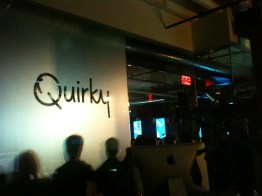
Click to see the photos my brother Maël and I took when we visited the Quirky HQ in New York, last year.

Click to see the photos that my brother and I took when we visited Quirky’s HQ last year.

Quirky, a company I blogged about quite regularly, has just announced the acquisition of the consulting firm Undercurrentin pivot to serve corporate clientsas Inc. notes. It is an interesting move, as it represents a shift from being (only) a product maker & distributor to (also) being a crowdsourcing agency that works for big clients. “Having joined forces with Undercurrent, Quirky can now give large companies access to its community of inventors and will give those companies exclusivity to certain product ideas,” Graham Winfrey’s Inc. article explains. So they’ll do pretty much the same than eYeka. Continue reading →

A Perfect Map Of The World Will Never Exist

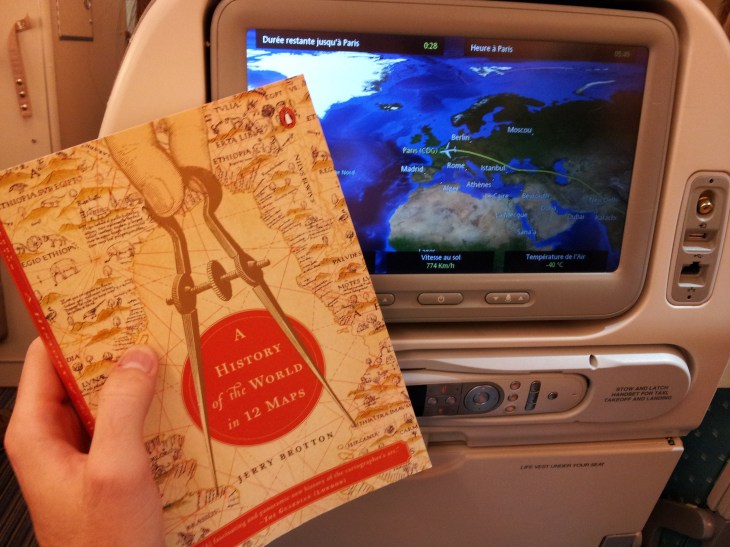
I started reading the book on my way back from Singapore. A live map showed us where we were in real time

I started reading the book on my way back from Singapore. A map showed us where we were in real time (which is not anecdotal, as I found out after finishing its last chapter about today’s usage of maps)

I love maps, I could stand hours in front one, whether it represents my city or the entire world; whether it hangs on a wall or it twist at my fingertips on my tablet. It is quite a creative and cheap way to travel! I just finished a fascinating book: A History of the World in 12 Maps, written by a British professor, Jerry Brotton. He explains how humans have always been driven to represent the world around them, and how each of these representations is shaped by cultural, political or commercial interests. Google Earth is no exception.

Continue reading →

Just Off The Press: Our #CSReport2015 Trend Report

eYeka April Wallpaper

I am happy to share the “The State of Crowdsourcing in 2015” trend report (“How the world’s biggest brands and companies are opening up to consumer creativity“) with you, which we wrote in collaborative spirit with François Pétavy (CEO of eYeka) and Joël Céré (Insights & Innovation Solutions Director at eYeka). For the first time since the beginning of the crowdsourcing phenomenon, besides a sporadic blog post in late 2013, this report takes a (big) step back to look at the evolution of crowdsourcing since the mid-2000s, providing important insights about how it is used for marketing and innovation across the globe. Continue reading →

10 Ads Based on Barry Louis Polisar Music

Image via autoevolution.com (click to see article)

The Volswagen ad from the UK, with B. L. Polisar sountrack (image via autoevolution.com)

Have you seen Juno? If you haven’t (even if you have) you may not know Barry Louis Polisar, the singer whose song “All I Want Is You” is used as the opening soundtrack. A true feel-good-song. Barry Louis Polisar is a famous author and singer-songwriter who writes children’s music and numerous children’s books, poems and stories – but Juno brought him to fame.

I found that after Juno (2007), two of his songs – or covers of them – have been widely used in advertising for brands like Nescafé, Coca-Cola, Volkswagen or Ronald McDonald House Charities. Here are 10 ads based on 2 of Polisar’s most famous songs, “All I Want is You” and “Me And You.” Continue reading →