My Favorite Readings in August: The Creative Process Illustrated, Cycling Across The USA & PhD After 40

Photo by Golem13.fr

Some of the tweets shared in this post feature memorabilia. Hence this photo of Paris in the summer with a photo of 1944 (click to see 49 more)

This month marked the 70th anniversary of the liberation of Paris. The photo on the left is one of many others that the blog Golem 13 has published on June this year, morphing old photographs into the exact same photo – 70 years later. A great project.

This month, I’ve read many interesting things about innovation, academic education, creative inspiration, object conservation or patriotic dedication. The very last tweet wraps up the post nicely with another Paris-themed illustration, an animated one. Continue reading →

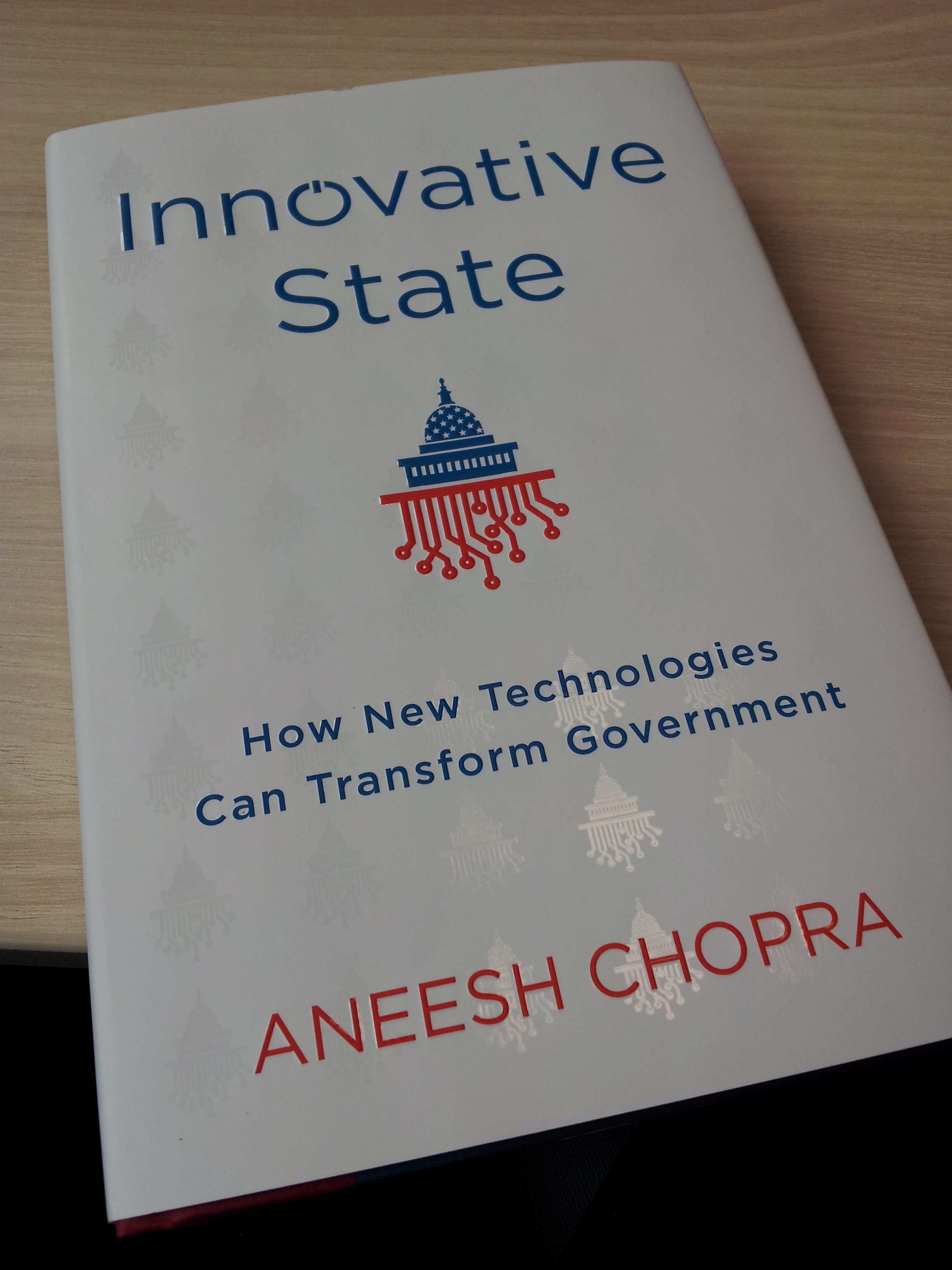
My Book Review of @AneeshChopra’s “Innovative State”

Click to enlarge

Click to enlarge

Aneesh Chopra was the first Chief Technology Officer (CTO) of the Unites States government, and served in this position from 2009 to early 2012. Since then, he has run for the office of Governor in Virginia (but has not succeeded) and created Hunch Analytics, a company which crunches public and private data to “help executives and industry leaders in health care, education and energy to make smarter business decisions.” But this post is not about the latter, it’s about Chopra’s experience as the USA’s very first CTO, and his vision of how technology can improve governments.

I enjoyed reading Innovative State very much, not only because it mirrors some of the phenomena I study in academia, but also because it reminded me of Gilles Babinet‘s book about his experience as a digital champion in France (disclaimer: Gilles Babinet is co-founder and board member of eYeka, where I work part-time). While Babinet had a much more consultative role, Chopra was leading the action in the White House – which also shows how seriously digital technologies are taken in France (not a lot!) compared to the US. Anyway. His views on how new technologies can transform government, shared in Innovative State, are highly interesting. According to him, four priorities (open data, impatient convening, challenges & prizes and attracting talent) should drive the US’s agenda toward becoming “a 21st century government that elevates the role of everyday Americans.Continue reading →

Cool: Holding Our First Book Chapter In Our Hands

Click to get to the chapter page

Click to get to the chapter page

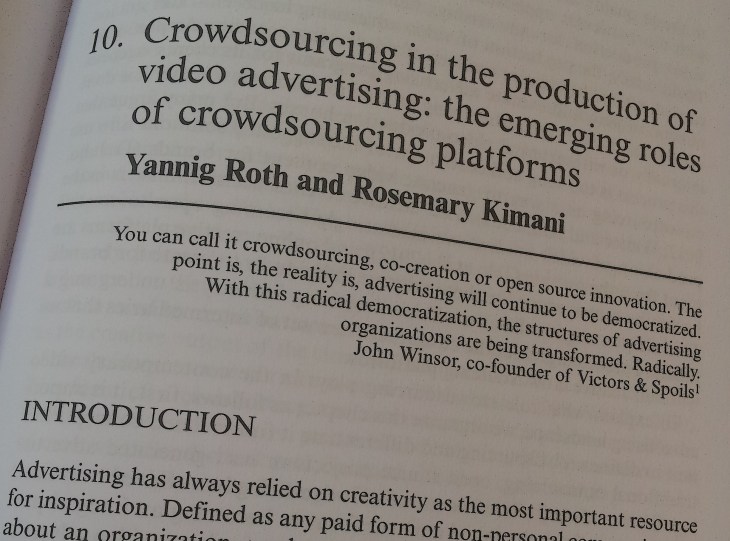
A book chapter is “peanuts” on the resumé of an academic, but when you hold the first copy of your life in your hand, it’s cool. The chapter about crowdsourcing in video advertising, which we write with Rosemary Kimani, has just appeared in the book International Perspectives on Business Innovation and Disruption in the Creative Industries co-edited by Robert DeFillippi and Patrik Wikström. The volume examines how disruptive innovations are reshaping industry boundaries and challenging conventional business models and practices in the industries for film, video and photography. Continue reading →

My Favourite Readings in July: Cycling In The Eurotunnel & The Cost Of Top Academic Papers

Image via @HistoricalPics

Image via @HistoricalPics

Here are 10 tweets from July, which are my preferred articles and readings of the month. You’ll notice that cycling is more present than usually – July is the month of the Tour de France – but innovation, academia and creativity are also featured in this month’s favourite links.

I also had the chance to attend the 12th Open & User Innovation Conference at Harvard Business School, which was a great event to meet fellow researchers and stay up to date with trends around crowdsourcing. Now I’m back in Paris and look forward to a couple of easy summer weeks in the city, which is much more quiet when everyone is away for holidays on the beach.

Enjoy the links.

Continue reading →

Is The Crowdsourcing World Flat? – #OUI2014

harvard business school

Click to see on Flickr

Today, I presented at Open & User Innovation Conference, at Harvard Business School, with two fellow crowdsourcing researchers from Canada (Prashant Shukla & John Prpic). Our talk, titled “Is the World Flat? Unpacking the Geography of Crowd Capital,” presented early results of a research about crowdsourcing participation across the globe. We’ve received very constructive comments from the audience, and are now looking forward to the rest of the conference. The setting is prestigious enough to make you want to learn about open and user innovation. Continue reading →

My Favorite Readings in June: Tough Academic World, Corporate Tweeting & Wikipedia Across Cultures

The very first IKEA catalog. One of my favorite reads this month is about IKEA (image via ikea.com)

This month, many things caught my eye and attention. Here’s a selection of news, events and articles that I enjoyed this month. A couple of them deal with academia, again, including people who complain about the toughness of the job. Others relate to social media, the internet of objects, consumer creativity or American politics. Just browse through it and see what catches your eyes.

Also – self-promotion is your friend – make sure to read my latest blog post which I published on Medium. Medium is a sleek-looking new publishing platform, very easy to use, and highly aesthetic. Continue reading →

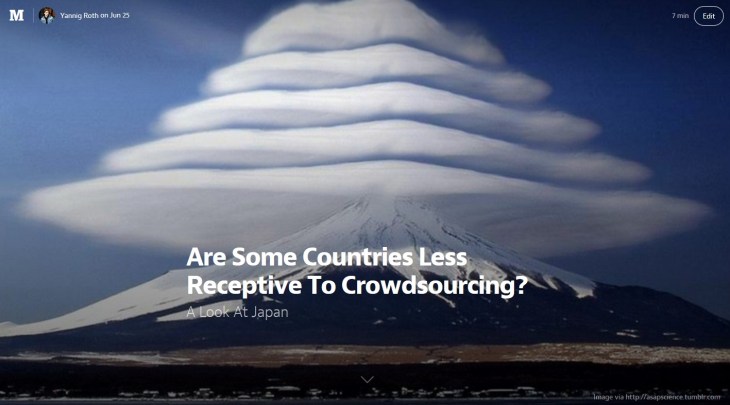
Are Some Countries Less Receptive To The Idea Of Crowdsourcing? A Look At Japan

Crowdsourcing Japan

Click on the image to read my post on Medium

Technology is global, companies and individuals are globally connected, and crowdsourcing is a global phenomenon. Anecdotal evidence shows that Europe and the U.S. are well-populated with crowdsourcing participants (see also here), but that still doesn’t say much about potential differences in acceptance of crowdsourcing across the globe (that could be an entire thesis!). I wanted to focus on one country: Japan. Is there something about the idea of crowdsourcing that could repell Japanese people?

As a nation, Japan scores high in cultural tightness and uncertainty avoidance, two cultural constructs that may lower willingness to embrace change and to take risks… But let’s not get into these academic cultural indices, let’s be pragmatic. I did a little bit of desk research to find out more, and shared my thoughts on Medium..

Read my post here