Quirky, le Modèle Industriel le Plus Innovant au Monde?

Image via Inc.com

Ce billet est une traduction d’un article passionnant que je viens de lire: Is This the World’s Most Creative Manufacturer? écrit par Josh Dean pour Inc. “Comment la société de design Quirky utilise la puissance de la communauté pour développer, fabriquer et vendre une foule d’objets utiles” (“How the renegade design company Quirky uses the power of community to develop, make, and sell a torrent of useful objects.”), dit le sous-titre. Cet article n’est pas seulement un descriptif avec des schémas et des citations de communiqué de presse, c’est un article bien recherché et très complet sur cette entreprise qui vient de se lancer en France.

Voici donc la traduction française, j’ai juste adapté la mise en forme, ajouté quelques liens pour faciliter la compréhension, et coupé quelques passages car l’article original est très long? Donc voici quelques passages. Bonne lecture! Continue reading →

OnlineVideoContests.com Features Crowdsourcing Platforms in Short Videos

OVC banner

The video contest directory OnlineVideoContests.com (OVC), which gathers all video contests on one great site (“#1 most updated video contest site on the web!“) and newsletter, has started the “OVC Spotlight” series. It’s an ongoing series of two-and-a-half-minute YouTube videos that describe different video crowdsourcing platforms (eYeka, Mofilm, Poptent ProjectED, Tongal, Zooppa…) is a clear, short and crisp manner. Marissa from OVC told me that:

We decided to create these Spotlight videos as a service to our community, so our creators could better understand all the video crowdsourcing platforms in the space Continue reading →

@DBrabham’s “Crowdsourcing” Book

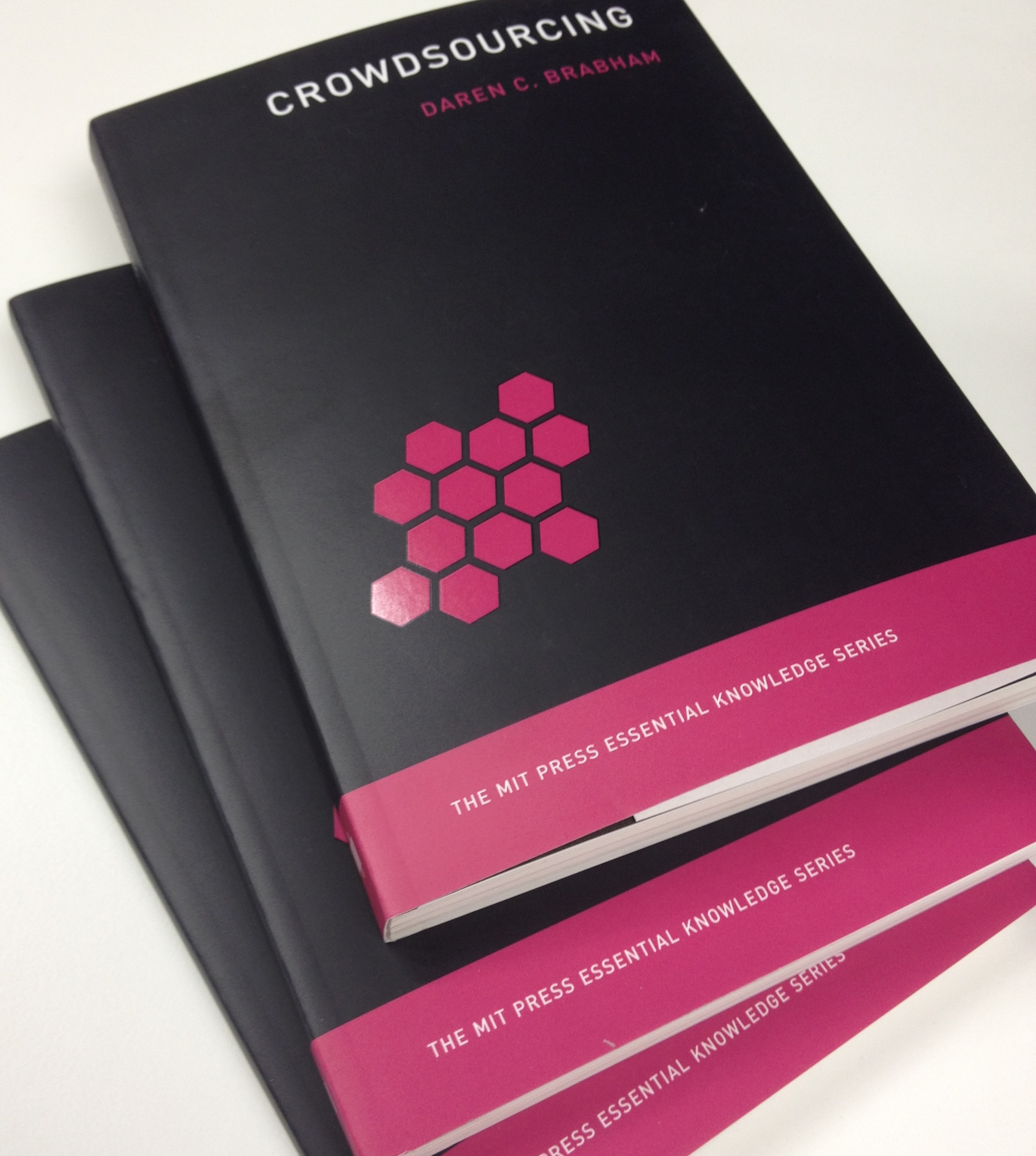
daren-brabham-crowdsourcing-books-photoSince Jeff Howe’s article (2006) and book (2008) on crowdsourcing, journalists and researchers have widely been using the term. In every article I read, from blog posts to academic writings, Howe is always given as a reference. The fact that most people relied on a magazine article and a business book gave birth to a variety of conflicting definitions of crowdsourcing (with or without Wikipedia, Linux, or YouTube) which made it really hard to understand for the layperson who didn’t have time to make her/his own opinion.

But one researcher, who wrote his doctoral dissertation about crowdsourcing, provided a clear definition from the start (which was as early as 2008): Daren Brabham. assistant professor in the School of Journalism & Mass Communication at the University of North Carolina at Chapel Hill.  He just wrote a book, simply called Crowdsourcing, published in MIT Press’ Essential Knowledge Series, about what crowdsourcing is, and what it isn’t. I hope it will be used next to Howe’s article (2006) and book (2008) in forthcoming writings about crowdsourcing, because it clearly dots the i’s.

Continue reading →

Genius Crowds, Another Company That Failed to Turn Co-Creation Into a Profit

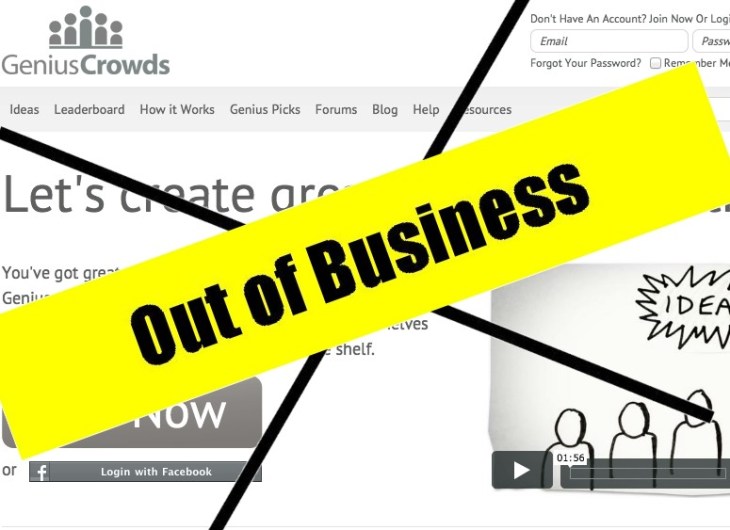
Genius Crowds is Out of Business

In May 2011, I covered the French platform Crowdspirit, and tried to discuss the reasons of its failure. In August of the same year, I wrote a blog post about the costs of co-creation, underlining that there are substantial costs to orchestrate crowdsourcing and/or organize co-creation, and that profitable platforms are actually rare. Well, very recently, crowdsourcing.org announced that a US-based crowdsourcing company, Genius Crowds, had to close its doors. Why? Because Genius Crowds was not able to turn their co-creative model into a profit.

“As a small startup, we frankly didn’t have enough resources to do the job of business development that we wanted to be able to do” (C.J. Kettler, CEO and co-founder) Continue reading →

Can This Start-Up Become the French Quirky?

Click to access novin.fr

I just discovered a new French start-up in the co-creation/crowdsourcing/open innovation field, it’s called Nov’In. The website describes itself as “the first social network for innovation,” allowing anyone to submit ideas that could turn into reality – if the crowd likes them – and have them sold in stores. Sounds familiar? The founder of the start-up, Ismael Meite, explains that his idea came from seeing the success of Quirky,which has a turnover of  about €30 million” (I don’t know where he got that information from, because Quirky is privately funded, but anyway). Here’s how it’s supposed to work… and my opinion about it. Continue reading →

Deezbox et Rankseller, deux start-ups qui débutent en France

deezbox-rankseller

Ceci n’est pas un billet sponsorisé mais un coup de pouce à deux entreprises qui viennent de débuter en France. La première est Deezbox, tout juste créée par des amis de l’ESSCA, qui offre la possibilité de commander en ligne des créations graphiques de manière abordable et rapide. La seconde est Rankseller.fr, une plateforme mettant en relation des blogueurs et des annonceurs pour l’échange de billets sponsorisé, qui vient de se lancer en France sous la direction de Maël Roth. J’espère qu’en les présentant ici, je peux modestement contribuer à leur développement. Présentation.

Continue reading →

My « We Are Smarter Than Me » crowdsourcing book review

we are smarter than me crowdsourcing book cover

We Are Smarter Than Me, How To Unleash the Unleash the Power of Crowds is one of the “older” books when it comes to crowdsourcing, as it has been published in 2008. The authors, Barry Libert (investor and strategic advisor) and Jon Spector (Vice Dean and Director of Wharton Executive Education), explain in their introduction that since “there is no practical guide to translate [the concepts of crowdsourcing, wikinomics and open source technology] into usable tools and techniques,” this book would “fill the gap, describing in detail how businesses of all kinds can make the wisdom of the crowd work for them.” But I must admit that I closed the book disappointed, here’s why. Continue reading →