 J’ai récemment lu le livre The Power of Co-Creation, un livre référence sur la co-création de valeur en entreprise. Ce terme désigne en fait le fait d’impliquer un maximum de parties prenantes dans les processus d’entreprise pour créer (co-créer!) une offre proche de leurs réalités. J’ai déjà cité quelques exemples de co-création sur ce blog et sur le blog d’eYeka, mais ce billet a pour objectif de détailler les deux exemples français du livre: La Poste et Prédica, la filiale assurance-vie du Crédit Agricole. Chacune de ces deux entreprises ont su impliquer des collaborateurs, employés et des consommateurs dans leurs processus d’innovation et de changement. Continue reading →
Author / YannigRoth
Those who embrace co-creation are savvy innovators
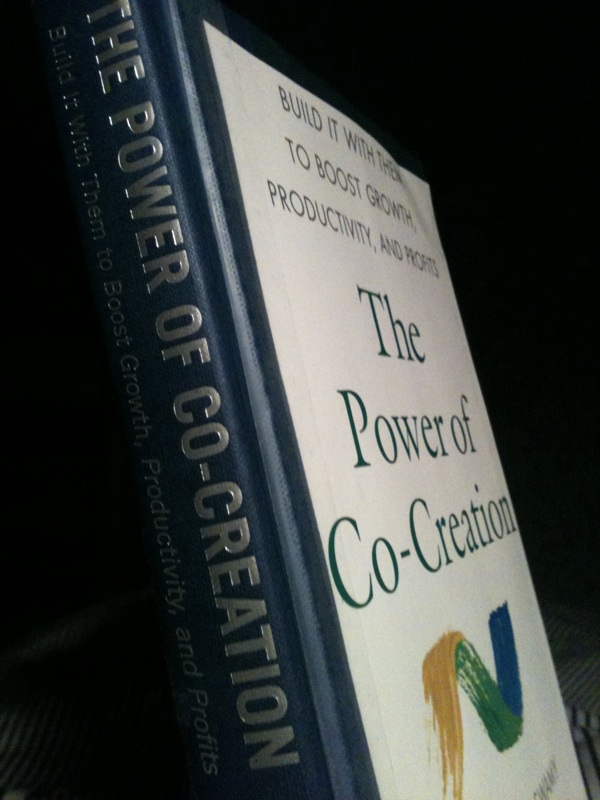
I just read The Power of Co-Creation, a reference book gathering various example of how companies used strategies of co-creation to innovate, manage or get products to the market. I was offered this book by eYeka, the company in which I’m currently doing an internship, and I really enjoyed reading it. Here are some impressions as well as interesting examples – other than Starbucks, Nike or Apple ! Continue reading →
The Arduino Project democratizes electronics… and allows you to print in 3D

I just watched Arduino, The Documentary on Vimeo, and I was very impressed. If you don’t know what Arduino is: it’s an open-source electronic platform thas is very simple to use and cheap. I already heard of it reading the book Marke Eigenbau, a German book on the way DIY (do-it-yourself) will change the way we consume. Anyway, Arduino now has a community of 120,000+ people using and improving the device (like Mozilla a couple of years ago… Mozilla just overtook Internet Explorer on the internet browser market), which means it’s getting big ! Continue reading →
Ca y est, on peut faire du vélo sur Google Earth !

Image via Instructables.com
C’est le site Instructables qui a trouvé le système. Après les vélos Google (qui capturent des images et autres données pour Google Street View) et l’option directions vélo sur Google Maps, la société de Mountain View permet maintenant à un cycliste de naviguer virtuellement dans Google Earth. Il suffit d’avoir un vélo (!), un home-trainer, une télé et quelques autres équipements courants ou open-source pour pouvoir réaliser le montage. Continue reading →
2010 in review
The stats helper monkeys at WordPress.com mulled over how this blog did in 2010, and here’s a high level summary of its overall blog health:

The Blog-Health-o-Meter™ reads Wow.
Crunchy numbers

About 3 million people visit the Taj Mahal every year. This blog was viewed about 34,000 times in 2010. If it were the Taj Mahal, it would take about 4 days for that many people to see it.
In 2010, there were 40 new posts, growing the total archive of this blog to 103 posts. There were 210 pictures uploaded, taking up a total of 383mb. That’s about 4 pictures per week.
The busiest day of the year was September 23rd with 210 views. The most popular post that day was Advertisement war within the automotive industry (2006).
Where did they come from?
The top referring sites in 2010 were facebook.com, bikerumor.com, bicycledesign.net, bicycledesign.blogspot.com, and twitter.com.
Some visitors came searching, mostly for boston university, sixt werbung, toblerone, alain minc, and colorado license plate.
Attractions in 2010
These are the posts and pages that got the most views in 2010.
1
Advertisement war within the automotive industry (2006) October 2009
2
Prison Valley, ‘Prison-nomics’ in Cañon City, Colorado (web-documentary) April 2010
5 comments
3
Cycleurope refreshes traditional brands Gitane & Peugeot January 2010
4 comments
4
Autovermieter SIXT : Aufmerksamkeit durch “Guerillastrategie” October 2009
2 comments
5
Le logo de Carrefour n’est pas le seul “subliminal” October 2009
4 comments
Happy New Year !

Hätte Schopenhauer getwittert?
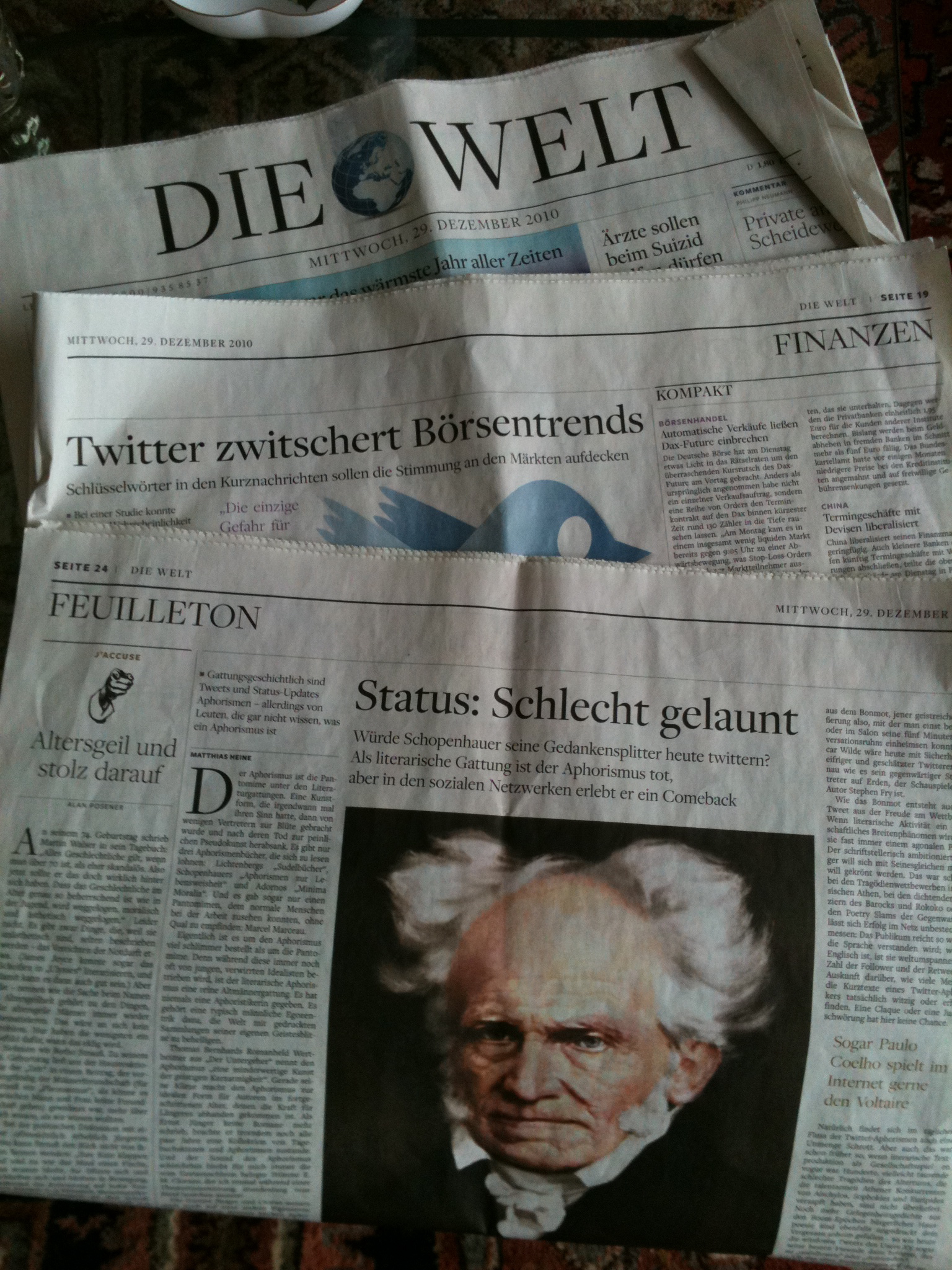
Schopenhauers "Aphorismen zur Lebensweisheit" hätten auch getwittert werden können, oder?
Ich hatte gerade die heutige Ausgabe der Welt in der Hand; und neben einem sehr kritischen Artikel über Google und Facebook habe ich vorallem zwei Artikel über Twitter bei Seite gelegt. Bei beiden handelt es sich um die bekannte Microbloggingseite – aber es geht um sehr verschiedene Umfelder: die Litteratur der vergangenen Jahrhunderte, und Finanzen der Gegenwart (und der Zukunft!) Continue reading →
 Yannig Roth / This is my personal blog